I am a firm believer that all things natural must remain just as they are and mankind needs or should find ways to work around the beautiful habitat – after all we are the intruders. 23 more words
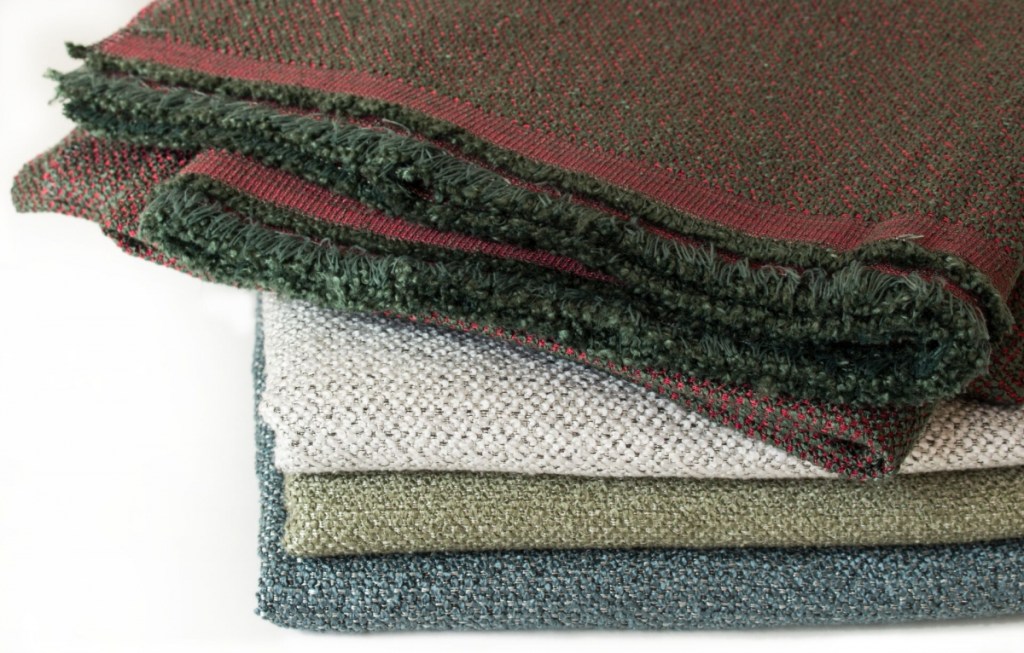
I love this book collection. Our finest fabric collection book is here. Beautiful color combinations, textures, patterns. All of our fabrics are Inherent FR, passes NFPA701, IMO, CAL117 and high double rubs with excellent functions. The collection is a combination of our upholstery, acoustic, outdoor, indoor, drapery, furniture fabrics. It is fresh and trend forward. Our fabrics are in stock. Good delivery time. A must have collection for your library.
To get your book call or email Nisha Desai at 702.622.8321 or email to nisha@nishadesigns.com
If you think of DELIUS you are probably thinking of the textile furnishing of hotels, senior residences, theaters, cinemas, etc. Are you also using our fabrics when planning sales areas, shops and commercial properties? If not please read on.
With our new store concept we are demonstrating where and how to use DELIUS fabrics in shopfitting; we also show you which fabrics are suitable for the different areas.
This high and low velvet delights; not only because of it extraordinary pattern but also by its modern colour range and enormeous durability. The special look arises from the irregularly blurred shapes. Its matt silky sheen makes the colours shine brightly. Powdery sorbet colours such as Blushed Rosé, Salbei and Pistacio harmonise well with deep shades such as Jade, Royal Blue and Aubergine. Finely graded natural tones complement the colour range. All in all there are 18 colours available. Thanks to the branded yarn Trevira CS Chloe is extremely durable with 200.000 martindale.
For most of its existence, the home textiles business—sheets, comforters, towels, et cetera—has been all about more. That took the form of everything from ever-higher thread counts (defying any known weaving technology) to bed-in-a-bag put-ups that approached the triple digits in their number of pieces, and towels that outweighed some bantam-weight boxers. More was better.
But recently, as evidenced by the wares on display at September’s New York Home Fashions Market, the industry has started to go in the opposite direction. After decades of excess, the business is finally discovering that less is, in fact, often more.
The twice-yearly trade show, held mostly in closed showrooms along Manhattan’s lower Fifth Avenue, is where big-box stores like Walmart, Macy’s, Bed Bath & Beyond and their retail brethren start buying next season’s goods. While shows in traditional market centers in Atlanta, High Point, Dallas and Las Vegas all feature higher-end soft home resources and bedding products, it is in New York where the bulk of the business in this $25 billion market segment is done.
Over the past few seasons, this sector has been in transition—working to bring to market products that appeal to the new generation of shoppers more concerned with attributes like sustainability, transparency and naturally sourced materials. It’s been an ongoing evolution, but the fall show made it apparent that the industry is heavily drinking this new Kool-Aid. In market introductions from suppliers large and small, several themes prevailed, reflecting these new sensibilities in core bed and bath products.
Sustainability and circularity: Bed and bath products have always gotten a bad rap for using too many natural resources in their production—water and land primarily—but the industry is making a concerted effort to move to a more sustainable model that emphasizes both recycled final products and individual components. Circularity, based on renewable resources as well as recycling, was a buzzword heard often in many showrooms, even if not everyone clearly understood what it meant.
Traceability: With the vast majority of home textiles products—at least 90 percent by most estimates—coming from the Asian production powerhouses of China, India and Pakistan, understanding the manufacturing chain for home textiles has often been a challenge. Using DNA marking, RFID tagging and other new technologies, vendors are now able to trace the raw materials in their products back to the growing fields, giving retailers and consumers alike a look into the entire production process.
Certification: Because there are no real regulatory or safety standards governing most soft home products, it’s always been a free-for-all on certifying products. Now, some international third-party organizations like Oeko-Tex and Global Organic Textiles Standard (GOTS) are gaining traction, often at the urging of retailers who want to offer a point of differentiation for their products. None of these labels are as well-known as established ones like the Good Housekeeping Seal of Approval or consumer electronics certifications, but they are rising in market prominence and placement.
Natural fibers and fabrics: Even though synthetic materials like polyester and memory foam are industry staples (suppliers and retailers have been wildly successful selling “micro-fiber” bedding even though it is essentially a descendent of polyester double-knit fabrics from the disco era), the raw material spectrum has dramatically increased recently, with tree-derived cellulose, linen, bamboo and other natural fibers. Cotton still maintains its overwhelming market share—but there, too, differentiators like Supima, Egyptian and Better Cotton Initiative (BCI) offerings are gaining in importance.
CBD: As part of a broader effort to jump on the health-and-wellness bandwagon, several companies introduced bedding products containing CBD extracts, either applied topically to the fabric or infused into the fibers. Without making explicit health claims—still very much illegal under U.S. laws, even as CBD itself is legal throughout the country—companies certainly implied that these products were good for you. The first wave will hit the market possibly as early as this holiday season, giving the industry a better read on consumer acceptance.
All of this attention to technology, innovation and product performance stands in stark contrast to earlier eras. Yes, there was fashion and, yes, there were plenty of designer names, but today the industry clearly is taking a different tack—one that strips products down to their essential elements, prioritizing origin and ethics over thread count or frills.
In fact, the only real exception to the less-is-more dictum came in the form of a novelty fad product, the weighted blanket. Countless companies showed heavy-weight blankets and comforters that supposedly promote better sleep. In that case, more is more. But nearly everywhere else, the less the better.
Warren Shoulberg is the former editor in chief for several leading B2B publications. He has been a guest lecturer at the Columbia University Graduate School of Business; received honors from the International Furnishings and Design Association and the Fashion Institute of Technology; and been cited by The Wall Street Journal, The New York Times, The Washington Post, CNN and other media as a leading industry expert. He was also a guest on the BOH podcast, and his Market Watch columnsoffer deep industry insights on major markets and product categories.
The interplay of a brilliant, fine warp and a voluminous bouclé yarn lends the upholstery fabric Harper an appealing, interesting appearance. Thanks to its soft handle Harper radiates pure homeliness. It is also extremely hard-wearing and can be universally used due to its wide range of colours (21 colours). Powdery relaxed tones are complemented by strongly contrasting colours: Black Plum, Bright Gold, Burnt Olive, Cranberry and Scarlet Red. Nutural colours such as a warm Shadow White and Biscuit contrast with a deep Black and are accentuated by metal tones.
Cara DELIGARD is the classic and elegant equivalent to our DELIGARD quality Deste. Both are particularly pretty in combination with our faux leather Ena und Romy. They are suitable for the furnishing of upmarket retirement homes and classical noble hotels. The diamond design offers an elegant sheen thanks to its noble satin construction; it is being accentuated by a pearly weft effect. Natural colours with strong undertones dominate the appearance of the upholstery fabric such as Light Petrol together with Mauve or Ochre-Red combined with a warm Silver-Grey. Cara has an elegant brightness due to the natural colour range with tones such as Shadow-White and Silver-Grey. The colour range is being complemented by a deep Night-Blue.
Our embossed and printed classical Dimout Edward has been redesigned with new colours. The new colours are based on the new Dimout range and are useful both for the health and care sector and the hotel sector. The classical floral ornament gets its modern face from strong, clear colours such as refreshing blues (Deep Lagoon), full greens (Vivid Green) and luminescent graded reds such as Scarlet Red, Raspberry, Burgundy and Black Plum.
Connor is an allround talent which is universally useable. It combines a natural wool look and the durability and price advantage of a polyester fabric. The polyester fabric achieves its natural wool apperance by a melange yarn which as a twill weave produces both quiet and contrasting shades. Connor can be used as an upholstery or furnishing fabric and it has a good sound absorption (class B). The above-average lightfastness is graded 5 – 6. A comprehensive colour range (28 colours) enables very fine colour gradations. Especially amongst the natural tones we can find selected shades such as Light Grey, Granite, Walnut, Desert Sand. Typical wool colours such as Deep Forest, Scarlet Red, Deep Lagoon, Burnt Sienna and Autumn Red enlarge and enrich the colour spectrum.
The high quality multi-coloured leno fabric Nexus is extremely durable. It is being accentuated by metallic shiny, dark yarns in the warp and has an elegant soft drape. In choosing the colours our designers were inspired by metal tones such as Silver, Grey, light Copper and Brass. Nexus DELI LIGHT is available in a width of 300 cm and in 6 colors.
The permanent bio-active functional fabrics by DELIUS offer freshness and hygienic cleanliness. Silver ions which are firmly embedded in the fibre stop the growth of bacteria both within and outside the fibre. They thus protect against infections like MRSA in hospitals. DELICARE fabrics also reduce the formation of odours caused by microbes.
Frequent washing does not reduce the function unlike with normal finishes. This is typical for DELIUS: the function is contained in the yarn and is not subsequently imposed by a finishing process; this also holds true for the flame retardancy.
DELICARE furnishing fabrics
are anti-microbial
prevents the growth of bacteria (hospital bugs, staphylococcus aureus which cause MRSA)
reduce odours caused by microbes
are conducive to a better hygienic standard in rooms
are suitable for industrial washing
have a long lasting wash resistance
conserve energy due to longer washing intervals and a lower washing temperature
are certified by the Fraunhofer Institute
are JIS 1902 certified
are Ökotex Standard 100 certified
Please call or email for more information at nisha@nishadesigns.com or call 702.62.8321
According to the relevant norms all textiles delivered by DELIUS are permanently flame retardant. For all furnishing and upholstery fabrics DELIUS uses high quality yarns made from Polyester FR or Trevira CS. Textiles made out of these fibres contain a built-in safety feature. DELIUS textiles offer long-term protection, unlike fabrics which have been subsequently treated with chemicals. This small but relevant difference results from the chemical construction of the polyester fibre: the flame retardant properties are firmly enclosed in the fibre. They cannot be changed by exterior influences.
IN COMPARISON: COTTON | POLYESTER VS. POLYESTER FR | TREVIRA CS
National and international flame retardancy norms
One is obliged to use flame retardant fabrics in almost all public buildings. These safety regulations, for example, apply to the public areas of hotels, schools, kindergartens, office buildings, caring homes and cinemas.The fire risk in buildings can be lowered substantially by these governmentally prescribed measures. Textiles by DELIUS fulfil the most important flame retardancy norms worldwide.DELIUS cooperates with various laboratories in order to carry out burning tests, in order to issue test reports, to obtain building inspection approvals and to organize certificates. On our Internet site you will find the relevant certificates for every article.
For more information on our FR Testing codes please do visit our website at https://www.delius-contract.de/en/function/flame-retardant/
View our whole collection online and call for samples to Nisha Desai at 702.622.8321 or email at nisha@nishadesigns.com




 nishadesigns.com