“On this Veterans Day, let us remember the service of our veterans, and let us renew our national promise to fulfill our sacred obligations to our veterans and their families who have sacrificed so much so that we can live free.” ~ Dan Lipinski- Wyndesong Collectibles
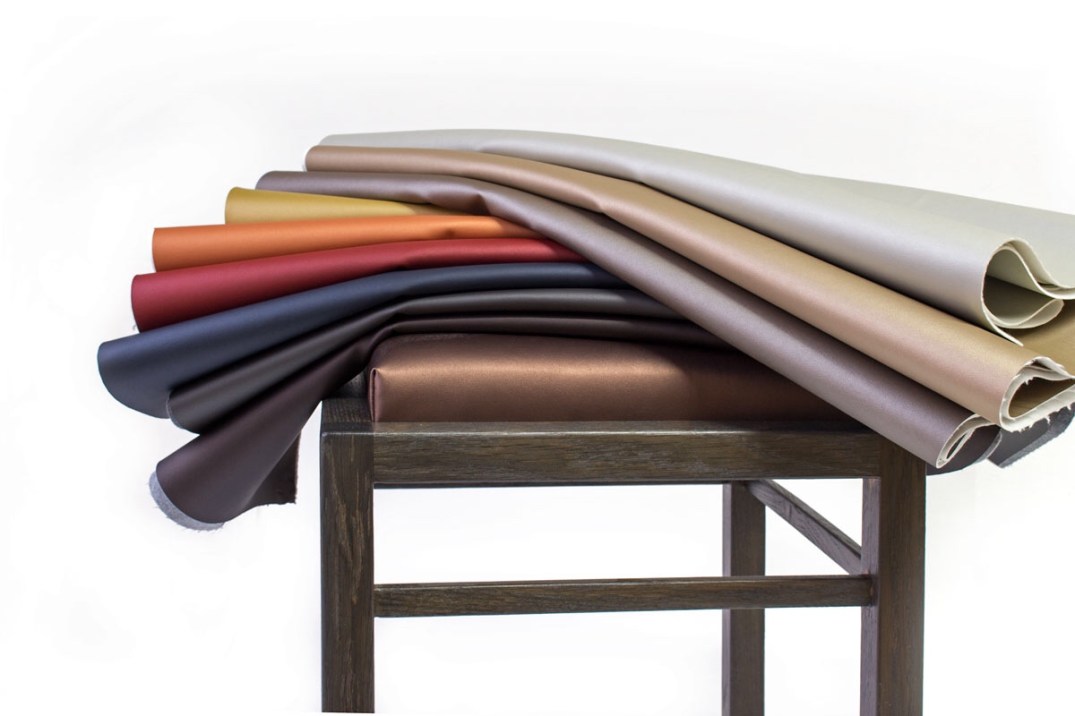
High-System PU (Polyuretan) Modern artificial leathers are coated with polyurethane (PU) instead of PVC, as PU is much more environmentally friendly in production, use and disposal. Conventional PU, however, has the disadvantage that moisture and bacteria can penetrate through the openness of the pores and thus permanently damage the PU. A new manufacturing process enables PU artificial leather to be produced with closed pores, so that there are no fractures in the surface – it is much more durable and hard-wearing. Our artificial leathers SOLO, KANO, JAGO, ENA and ROMY have been produced with this special PU manufacturing process, called High System PU.
Our modern faux leathers are also particularly soft and insensitive to soiling. They are quick and easy to clean. With over 300,000 rubbing cycles, our faux leathers are durable and robust. Due to their permanent bi-elasticity, the materials can be easily upholstered according to all processes customary in the upholstery industry. The advantages of High System PU faux leather are:
free of phthalate
high and permanent elongation
particularly hard-wearing
easy care
insulating against cold
breathable
PU is recyclable
FAUX LEATHER
Romy has a beautifully grained, matt surface that can hardly be distinguished haptically from genuine leather. The leather look is supported by warm natural shades.
Ena, on the other hand, is modern and bold with its smooth, metallic surface and strong accentuated colours. In addition to the classic metallic tones such as gold, copper and silver, strong tones such as orange and red stand out.
Jago has a natural leather apperance; its slight vintage look makes it extremely suitable for the furnishing of a modern hotel. It is ideal for headboards, bed surrounds and seating furniture of all kind. The authenticity of the faux leather is underlined by the colour range which concentrates on natural and grey tones.
Kano is a faux leather with a fine graphically embossed structure and a modern metallic sheen. The colour range comprises metal tones such as steel, titanium, silver and bronze as well as black and white.
Solo has a large colour palette with strong colours paired with natural leather tones. Solo is particularly beautiful in combination with upholstery fabrics from the DELIGARD series.
COLOURLINE
Colourline is an imitation leather made of PVC which is extremely durable. It stands out due its good resistance to weather influence, UV light, water, heat, cold and chemicals. 70 colours offer extensive design possibilities.
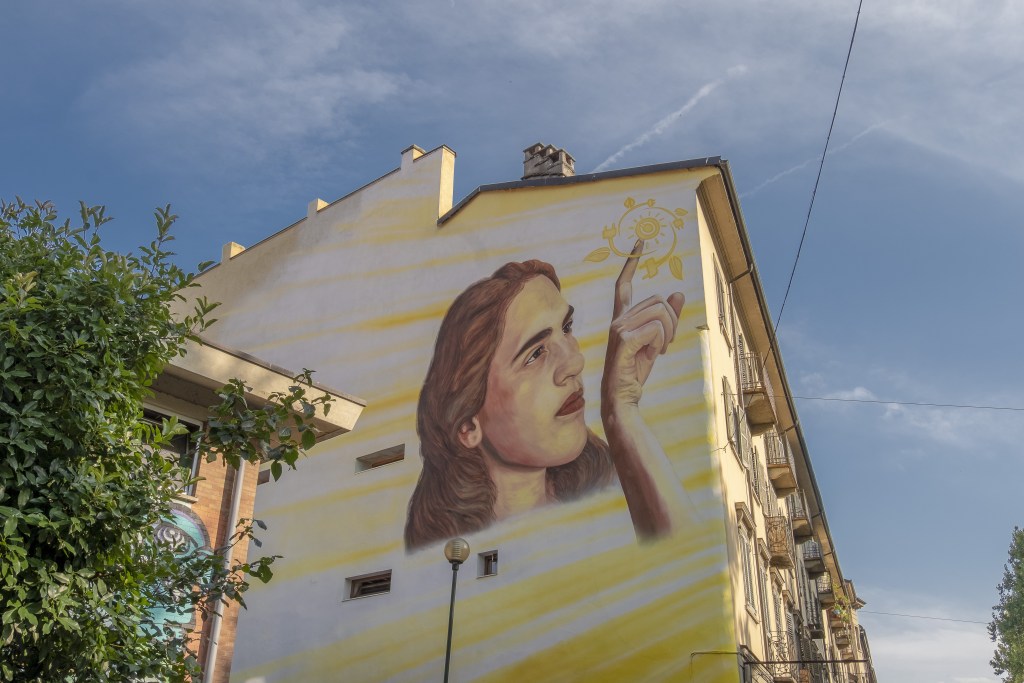
A mural created to raise awareness of the importance of sustainable energy has been created in Turin. From Barcelona based Jorge Rodriguez-Gerada. It is a piece which, according to the artist, “alludes to the importance of acting now to assure a positive outcome.” Called ‘Promise’ it features the image of a young girl. She is…
A new eco-hotel in Finland is set to charge its guests based on the carbon footprint of their stay.
Arctic Blue Resort, which opens in the small city of Kontiolahti in 2022, will be the world’s first resort where the price is emission-based – meaning the smaller the guest’s environmental impact, the less they pay.
Visitors of the resort can influence the cost for example by consuming less energy, attending ecological activities and making sustainable dietary choices.
From the same people behind the Arctic Brands Group, who make high-quality artisan spirits from ingredients found in Finnish nature, the Group believe that companies are obligated to find new solutions to fight climate change.
Mikko Spoof, the Vice President and founder of Arctic Brands Group, said: “We want to offer people a world-class eco-vacation and encourage them to make sustainable choices by having emission-based pricing for their stay. We want the resort to be a place of true tranquility and thus encourage our guests to be more present in the moment and embrace digital detox.
“With Arctic Blue resort we want to lead an example by putting emphasis on environmental responsibility and by creating solutions to minimise the negative impact of tourism.”
Arctic Blue Resort is designed to be as sustainable as possible – built with natural materials, powered by renewable energy sources, and with its own water treatment system, the eco-hotel will be self-sustaining. Keeping in line with the natural surroundings, guests will also be able to choose from rooms where they can sleep under a starry night sky or enjoy a 360-degree view of the forest.
In addition to a restaurant serving locally sourced food, Arctic Blue Resort will also offer guests nature-inspired activities and excursions – including ice-swimming and snowshoeing in winter, and berry-picking and rowing in the summer.
Rosa Medea is Life & Soul Magazine’s Chief. She writes about lifestyles including sustainable and green living. She also offers content services to businesses and individuals at Rosamedea.com
Sustainable cabins in secret locations, otherwise known as Slow Cabins, are popping up outside the city of Belgium in a bid to help people connect with nature.
Each cabin, built using eco-friendly materials with wooden interiors, is off-grid and self-sufficient through the use of solar panels, a filtered rainwater system and ecological dry-toilet. There are cabins of two kinds to suit individuals, couples and families.
The nature-based locations of the Slow Cabins are only revealed to guests after they’ve booked a cabin. Slow Cabins are mobile and frequently rotate locations, making for new sights and experiences for those looking to book a second trip.
The interiors of the Slow Cabins are natural and minimalist with its raw-look wooden floors and walls, and wooden furniture. Insulated glass windows frame views of surrounding fields and woodland, and there’s a wood-burning stove to cosy up in front of – and a small deck. The double beds consist of eco-textiles layered on a natural latex mattress, with large windows for gazing out into the surroundings.
The insulated cabins are kept toasty in the winter with wood-burning stoves, while the kitchen contains a pair of cooking plates alongside a sink, small fridge and a food preparation area. In the bathroom you’ll find a shower, wash basin and eco-friendly dry toilet. A fireplace and ceramic BBQ offer warmth and cooking options outside.
A stay also comes with a basket of locally-sourced produce and spring water.
The Slow Cabins experience is as much about making guests aware of their environmental impact. Slow Cabins say: “Each of our cabins comes equipped with a smart display that shares your energy and water use with you. By actively seeing your energy usage throughout your stay you become aware of your impact on the environment and what a positive and ecological footprint might look like.”
The Time For Two couple’s retreat costs from €175 per night, while the Time For Family cabin, which sleeps 3-5 people, costs from €185 per night.
Slow Cabins is expanding its off-the-grid concept across Europe and looking for partners.
Rosa Medea is Life & Soul Magazine’s Chief. She writes about lifestyles including sustainable and green living. She also offers content services to businesses and individuals at Rosamedea.com
The wisdom of a warrior is a good starting point for anyone who has chosen to work on themselves, and follow the path of their true self. The legendary Miyamoto Musashi, heralded as Japan’s greatest swordsman and samurai warrior, was also a celebrated writer and artist too, penning key writings on Japanese samurai tactics and philosophy – Go Rin No Sho (The Book of Five Rings), and Dokkōdō (The Way of Walking Alone).
Born in the Japanese province of Mimasaka in 1584, Miyamoto Musashi trained himself in the art of sword fighting at an early age and at the age of 13, he went on to win his first duel – one of many. He invented the Ni-Ten Ichi Ryu style of fighting with two swords, which is the most instantly recognisable visual features of the samurai.
Dokkōdō, a short text outlining self-discipline, was written the week before Miyamoto Musashi died in 1645 of natural causes. Consisting of 21 precepts, it expresses a way of living that is aligned with one’s self or true self.
Here is the 21 precepts of Dokkōdō:
Accept everything just the way it is.
Do not seek pleasure for its own sake.
Do not, under any circumstances, depend on a partial feeling.
Think lightly of yourself and deeply of the world.
Be detached from desire your whole life long.
Do not regret what you have done.
Never be jealous.
Never let yourself be saddened by a separation.
Resentment and complaint are appropriate neither for oneself or others.
Do not let yourself be guided by the feeling of lust or love.
In all things have no preferences.
Be indifferent to where you live.
Do not pursue the taste of good food.
Do not hold on to possessions you no longer need.
Do not act following customary beliefs.
Do not collect weapons or practice with weapons beyond what is useful.
Do not fear death.
Do not seek to possess either goods or fiefs for your old age.
Respect Buddha and the gods without counting on their help.
You may abandon your own body but you must preserve your honour.
Never stray from the Way.
Rosa Medea is Life & Soul Magazine’s Chief. She writes about lifestyles including sustainable and green living. She also offers content services to businesses and individuals at Rosamedea.com
Daughter of the Dust **there is no paint on this artwork** Cotton, silk, wool, velvet and suede
Butler, a formally trained African American artist of Ghanaian heritage, broaches the dividing line between creating with paints on canvas and creating with fiber by fashioning magnificent quilts and elevating a medium hitherto designated as craft into one that is clearly high art. While quilts have historically been isolated in the history of art as the products of working women, Butler’s work not only acknowledges this tradition, but also reinvents it. Continuing with an aesthetic set in motion by artists such as Romare Bearden and Faith Ringgold, Butler forges an individual and expressive signature style that draws upon her own cultural background and experiences.
Dear Mama (detail): quilted and appliquéd cotton, wool and chiffon
Her emergence as a quilt artist began humbly when, as a result of a fiber arts class taken at Howard University, she constructed a quilt for her dying grandmother mainly as a means of comfort. As a child Butler had often spent time poring over black and white photographs with her grandmother, who told her stories about the people in each one. This experience of creating narrative and identity informs her quilts. The vibrant portraits of African American life and the tales the quilts tell are largely based on photographs from which Butler takes inspiration. She creates a story around each image, and, in her choice of fabrics, she uses texture, color and the cultural origin of the cloth as part of a personal iconography that makes statements about society and identity. African painted cotton and mud cloth tells the story of her ancestral homeland, vintage lace and aged satin might demonstrate the delicacy and refinement of times past while multi-colored organza and layered netting can convey a story of someone colorful and multifaceted.The constructed nature of the work with its reliance on piecing and stitching acknowledges the traditions of needlework normally associated with women and domesticity. Butler subverts this notion through her choice of motifs, embellishments, patterning and scale, all drawn from African textiles.What results are stunning works that transform family memories and cultural practices into works of social statement.
The Mighty GentsThe Equestrian: quilted and appliquéd cotton, wool and chiffon
Nicolas Poussin (June 1594 – 19 November 1665) was the leading painter of the classical French Baroque style, Mythology style, although he spent most of his working life in Rome.
Poussin Technique
Poussin was deeply interested in the classical era of art, architecture, history, and philosophy and sought to include aspects of these in his work. His style morphed from sexy, richly-coloured mythological scenes to strong lines and darker-coloured religious images.
Poussin’s style became more and more classical over his career, and he became known as the leader of classicism. The subjects were clear, without distracting back or foreground, colour was toned down and subjects looked to be posed like heroic statues.
Poussin always researched his subjects thoroughly. He would read the entire story from which they were featured, whether from ancient Greece, Rome, or the Bible. His paintings told so much of a story in one scene, that Poussin became known as “the great storyteller.”
Nicolas Poussin. The Death of Germanicus. 1627-1628.
He had a very methodical approach to painting. Before he started painting, he would:
make sketches on pen and wash;
create small wax models and arrange them in a box like a tiny theatre, to study the light effects;
create larger models to model the gestures he was trying to capture;
add taffeta or wet paper to the models to study its draping effect;
And THEN he would finally start painting. It was a very long process! As he said himself, when asked what the key to his success was, “I tried to neglect nothing.”
Nicolas Poussin Pharaohs Daughter Finds Baby Moses. 1638. Louvre, Paris, France.
Nicolas Poussin. The Baby Moses Saved from the River. 1647. Louvre Paris France.
Later in his career, landscape became a subject he often painted. From 1660-1664, he painted the series The Four Seasons depicting changes in seasons, changes in time of day, age, and the evolution of the spiritual history of humanity.
For centuries thereafter, the work of Nicolas Poussin was used as a standard in the teaching of art in France.
Moving into a new room or even updating an old room can be quiet a daunting task. Creating a space where you feel comfortable and safe is key to turning any place into an actual home. 22 more words
Tyres are finding new life as life-sized sculptures of animals courtesy of Blake McFarland’s visions.
The former baseball player and mixed-materials artist has created an animal kingdom of artworks which include a cougar that stands around 4 ft tall and 7 ft long; a tiger made from 4,000 shreds of Goodyear tyres; and pandas created using black and white recycled tyres.
Each sculpture uses strategically placed tyres which are woven and secured. The grooves in the tyres give a muscle-like definition to the animal sculpture, while the different treads and widths of the tyre material also provide texture to emulate the animals’ fur. An average sculpture uses around 100-400 tyres and takes up to a month to complete.
Blake McFarland’s most recent work and one of his finest is of a lion’s head, which makes use of hundreds of pieces of basketball leather to achieve the big cat’s mane.
The San Jose-born artist loves being able to be eco-friendly by using mostly recycled materials to make his distinctive art. Working with different materials including recycled ethernet cables and wires as well as tyres means that Blake McFarland gets to explore creative ways of using everyday items that would otherwise go to landfill.
Blake McFarland began his art career painting ocean scenery and landscaped with acrylics. While he was a pro ball player for the Blue Jays, he would paint during the off-season. And it was in 2012, that he found the medium that he was truly meant to master and work with.
In an interview with The Hardball Times, Blake McFarland said: “In 2012 during the off-season, my wife [Jessica] and I were in St. Louis and we drove by this playground where there were a bunch of tractor tires stacked up in a dragon-snake-serpent design. It sparked my interest. Tyres were not being used anywhere – you see them on the side of the road all over the place – and maybe it’s something to work with. From there, I had to teach myself that entire thing, too, which took some time.”
The former baseball player retired from the game last year following a shoulder injury, and is now a full-time artist.
Rosa Medea is Life & Soul Magazine’s Chief. She writes about lifestyles including sustainable and green living. She also offers content services to businesses and individuals at Rosamedea.com
Sculptor and Artist Bruno Torfs’ garden, part of the luscious sub-alpine forests of Australia’s Marysville, is home to a wonderful array of magickal and mystical beings that he himself carved from wood and made using earthenware.
Bruno’s Art & Sculpture Garden, located in Melbourne’s Yarra Valley, has long been a haven for those with a connection to nature and its magickal inhabitants. Among the garden’s residents are a bearded wizard, various fae, a lion, Mowgli, native women, a witch, and Sherlock Holmes and Watson characters.
Bruno Torfs incorporates the natural landscape into his art, using tree branches and leaves as a part of his subjects’ hair or body. After carving, they remain unpainted and blend in with their surroundings.
The South American-born artist’s collection of wooden and terracotta life size sculptures were extensive until the Marysville bushfires of 2009, which tore through much of his garden.
Since the bushfires, Bruno Torfs has rebuilt his home and gallery. The garden has blossomed into a new stage of life, most of his terracotta life size sculptures have been restored and visitors can see his surviving paintings as well as new works in the unique new gallery space.
Rosa Medea is Life & Soul Magazine’s Chief. She writes about lifestyles including sustainable and green living. She also offers content services to businesses and individuals at Rosamedea.com
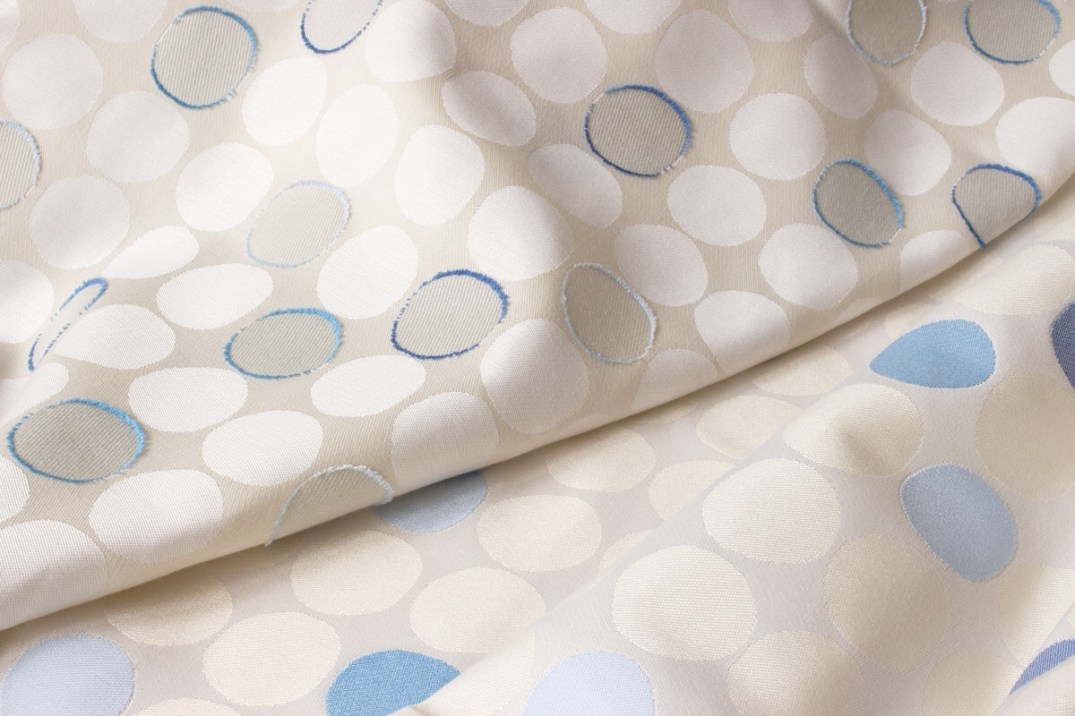
The permanent bio-active functional fabrics by DELIUS offer freshness and hygienic cleanliness. Silver ions which are firmly embedded in the fibre stop the growth of bacteria both within and outside the fibre. They thus protect against infections like MRSA in hospitals. DELICARE fabrics also reduce the formation of odours caused by microbes.
Frequent washing does not reduce the function unlike with normal finishes. This is typical for DELIUS: the function is contained in the yarn and is not subsequently imposed by a finishing process; this also holds true for the flame retardancy.
Frida, Jeff DELICAREFrida DELICAREJeff DELICAREFrida, Jeff DELICAREFrida DELICAREJeff DELICAREFrida, Jeff DELICARE
DELICARE furnishing fabrics
are anti-microbial
prevents the growth of bacteria (hospital bugs, staphylococcus aureus which cause MRSA)
reduce odours caused by microbes
are conducive to a better hygienic standard in rooms
are suitable for industrial washing
have a long lasting wash resistance
conserve energy due to longer washing intervals and a lower washing temperature








 nishadesigns.com