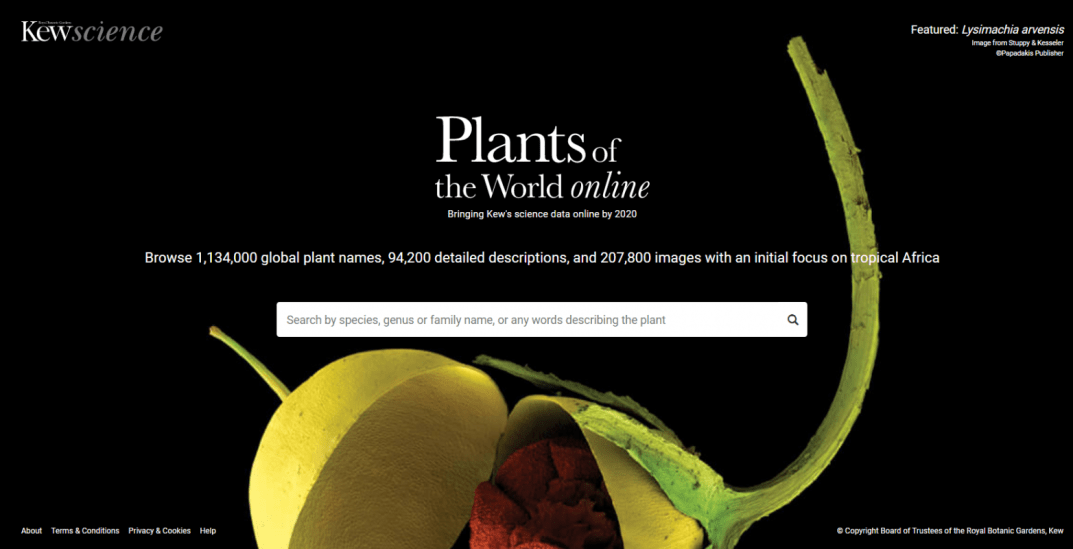
Plants of the World Online (POWO), an online portal from Kew, is sharing known data on more than 1 million plants so that it can be used for research purposes, and to inform decisions about conservation, land use, policy and practice. A work-in-progress project that launched in 2017 with the aim to bring Kew’s science […]
Walking the path of earth is living in harmony with nature in everything we do. The word nature literally means “that which is born.” When the poet e.e. cummings spoke of the difference between “a world of made” and “a world of born” in one of his most famous poems, he gave voice to trust in nature— recognize that the natural world is our home, our source, and the teacher of the wisdom we most need to learn- Philip Carr- Gomm
The Celtic symbol of the dragon is magical, one of transformation and eternal wisdom. The druids respected dragons as forces of nature, the guardians of mother earth and all things sacred, the protectors of nature and all living things. The dragon holds the powerful Celtic symbol of protection and power. These magical beings represented all that the universe has to offer.
Dragon energy was worshiped and used for the greater good. At special celebrations of the turning seasons of the year, to harvest the right crops, as a true guardian for all they held sacred.
The earth dragon has a symbolism of nature and all things connected to our Mother Earth. The earth dragon asks us to connect with nature in all of its beauty. The true wealth is not money but from the beauty of our land.
Call on the energy of the earth dragon if your energy needs grounding, or if you have lost your way a little, she will reconnect you to true source and bring back your power.
Morag Myerscough is hugely passionate about what she does. Full of energy and full pelt into conversation as soon as I arrive at her London studio – though she admits a couple of coffees were involved – this is mostly her decompressing from presenting to a client that morning. She is passionate about what she does – but what is that? The labels graphic designer, designer and artist have variously been applied, but Myerscough doesn’t care to be labelled. Her website has no bio, and she has no business cards – much to the shock, she says, of a cohort of students she met recently. If you look at her work for clues, one of her best-known projects is a much-photographed wall in London’s new Design Museum, but others include the Temple of Agape on London’s Southbank, a ‘Belonging Bandstand’ that moved around Sussex, bedrooms for the Sheffield children’s hospital, and the 2015 Stirling Prize-winning project of Burntwood School that she collaborated on with architects AHMM.
The Temple of Agape. Image credit: Gareth Gardner
A project she has just presented was Mayfield in Manchester for developer U+I. Mayfield is a formerly derelict site in the process of being regenerated into a mixed-use development and public park. Myerscough’s large installation there displays the common traits in her work: it is a temporary, community-minded intervention in a public space, to be completed in a short deadline. Sceptics might see the combination of developer and artist as an exercise in ‘artwashing’, but there is a history of collaboration between her and Martyn Evans of U+I since a London community project, the Movement Cafe, completed in 2012. Myerscough is confident that what U+I is doing is positive, as ‘they do have a conscience’, and she is careful about who she works with, especially as she becomes better known and people approach her more and more. With developers, she says: ‘There’s always a level of moneymaking … but if you’re not displacing anyone or anything then I think it’s really important that places like Manchester get money put in them by different developers … because, obviously, if the European money gets taken away…’
There is a history of collaboration with U+I since a community project called the Movement Cafe. Image credit: Gareth Gardner
Just as she has to trust the client, they have to trust her. If they do, she ‘will go beyond – far and beyond’. With this trust – and with age too, says Myerscough – comes a sense of freedom and confidence. She no longer feels like a designer fulfilling a brief for a brand, as she explains: ‘Now I’m doing Mayfield, I’m not really responding to it being the brand or whatever; I’m responding to the social environment and all the people.’ It’s a more personal response, ‘a different space where it comes more from me’.
Despite having plenty of experience, Myerscough always looks critically at what she does. She believes it is very important for more established designers to relate to younger generations. With personal growth it can too easily be forgotten that the world is changing too: she talks about the ‘old-school’ and ‘male’ situations still being created by certain, older architecture and design figures, while outside of the industry she laments former prime minister Theresa May being ‘so old-fashioned [as a woman], so wrong in every way’.
One of the best-known projects is a much-photographed wall in London’s new Design Museum. Image credit: Gareth Gardner
Although she frequently collaborates with artist Luke Morgan, Myerscough is a one-woman studio, which she set up in 1993. How she defines herself and her work is important, and she remembers the confidence and ease with which her male peers would start out on their own (Thomas Heatherwick launched his eponymous studio around the same time). Their ease, and her discomfort, was due to rather entrenched attitudes in the industry about gender. She regrets the name slightly – choosing Studio Myerscough rather than Morag Myerscough in order to appear bigger and more established – because she still meets people who are either unable or unwilling to make the connection between her achievements and the studio’s. However, Myerscough prefers remaining on her own even as the projects grow: being the whole of Studio Myerscough gives her freedom with her ideas, time and ambitions, and fewer financial considerations as she hasn’t employees to pay.
Studio Myerscough. Image credit: Luke Morgan
Looking back at Myerscough’s career, you see where the various labels came from. Prior to the studio she studied graphic design, although she has never felt this reflected her work. Professionally, she has been employed as a designer – for Lamb & Shirley post-graduation and then as head of the graphics team for Memphis Group member Michele de Lucci in Milan – before coming back to begin Studio Myerscough. Its first project was a competition for a giant hoarding, which she entered and won with AHMM, and although she never wanted to be an architect the two have worked together on other jobs to much acclaim beside Burntwood School, such as the 2008 Stirling Prize-shortlisted Westminster Academy at the Naim Dangoor Centre, and a new installation in London’s Broadgate development. She was appointed a Royal Designer for Industry, but if she were to describe herself it would be as an artist.
The Belonging Bandstand in Brighton. Image credit: Morag Myerscough
What do you see in Myerscough’s work? For the unfamiliar it is eye-catching: colourful, often large in scale and in the public realm. You can sense her artistic background: her mother was a textile artist, her father a musician, and her family has roots in the circus. She says her penchant for temporary installations is due to the memory of the childhood thrill she felt when the circus came to town – bright colours and gaudy excitement where there was nothing before.
People can be scared of her neons and loud hues, but she uses her experience with colour to challenge those fears. For Sheffield’s children’s hospital the staff initially balked at her multicoloured designs, preferring ‘calming blue and green’. But once ‘they realised we weren’t trying to kill the children’ the mocked-up bedroom designs went down very well with the patients, parents and staff – and, as it turns out, teenagers particularly love orange.
For Sheffield’s children’s hospital the staff initially balked at the multicoloured designs. Image credit: Jill Tate
Sometimes you need to be shown things to understand: Myerscough talks about only realising some of her references for the Temple of Agape project upon walking through the erected structure (such as a temple she visited in India, where light entered beautifully through small openings in the walls).
Myerscough is interested in the difference between looking and seeing – one being passive, the other being active. This affects her approach to working with communities on public projects – considerable impact is made by how volunteers engage with the painting of the piece, able to see it after and say ‘I think I painted that bit’. On that same theme, a festival in Aberdeen called Look Again encouraged locals to reconsider a location in the city called Mercat Cross, which at that time was only frequented by drunks. The project had personal significance for Myerscough because Aberdeen was where her parents met and fell ‘in Love at First Sight’ – the name of the piece she produced for the festival. In among the brilliant team of women running the event, she felt her heritage more keenly than ever, seeing herself as she knew her mum – as a strong Scottish woman.
Myerscough may not like labels, but words are an important part of her work, often appearing large and readable from a distance. These words do not define but hope to provoke conversation. She often likes working with poets, and on Love at First Sight Jo Gilbert contributed with poetry in the local Doric dialect. Myerscough understands that people want to be recognised and appreciated for their unique knowledge and experience, but this can be a challenge for her original vision of a project. In Aberdeen the poem’s 300 words that needed painting were daunting, but Myerscough believes the point of collaboration isn’t to compromise.
Nor is it easy to work with large groups of volunteers rather than a dedicated, trained team, but the rewards are far more valuable, as volunteers treasure the experience. With every project Myerscough learns too – she tells me about how moved she was after a workshop with a blind school, as she never dreamed her work could reach beyond the visual in the way that it did, with the children making ‘incredible’ patterns with stickers and a grid.
At times during the interview I wish she would acknowledge the recognition that different groups want to give her – she inspires architects, designers, artists, nurses, patients, students and more, as their positive feedback testifies. Official accolades are rolling in too: a professorship at UCA Epsom, an honorary fellow at CSM, and a doctorate at Gloucester University, following one she received from Bournemouth, and on top of all this the appointment as a Royal Designer for Industry.
Open and enthusiastic, Myerscough’s heart is on her sleeve, but it is also on the painted surfaces of her work. She could be defined by her many labels and her many awards, but she is most confident in being defined by her work and the responses to it: colourful structures that light up spaces and the faces of those who visit them.
Miracle: how you choose to look? If you see and believe in miracle is sure is miracle. If you see problems then sure will be problems. If you see fear then sure there will be fear. Think of all of your emotions as people. Would you allow the person name problem to enter your home? Would you allow the person named fear to come inside your home? I am hoping not. So why would you let any of these beings/ people/ energy live inside of you? Who do you want to allow in your home/ your sacred body is always your choice. There is always order/ miracle amidst of chaos. It’s how you choose to look at it, how you choose to believe it. This is the unknown right here today that we have come face to face. That you have to trust. Matter of fact you have no choice but to trust now isn’t it? Which is a Miracle in itself. Don’t you think? Nothing could get you to this place but self quarantine? Unknown will take care of you if you are choosing to do the right thing. Walking your truth. You have to believe in it first then you will see the miracle not the other way around. So many of you fear unknown? It’s funny isn’t it now that you have no where to go but have faith and trust in the unknown. No where to go but deal with your own self? Your own way of being while you are under quarantine? I am sure the thoughts inside of you don’t let you rest, relax be at peace isn’t it? Constant chatter? Moving? Don’t know what to do with yourself and how to be yourself? Hmm. Yes this is where self work, meditation comes in. Discipline comes in, spiritual studies come in. Working on yourself, meditation all these are tools given to us to show us how to live. But we chose to become so busy with stuff and life and being self centered and pointing fingers at others, that I am right and you are wrong and about money and racism that looking inside and taking responsibility of our own stuff was never a priority? That we took no time to stop, listen, breathe?🙈Now that you are quarantined who is truly going to help you here? There is no one outside of you to help you trust? Help you relax? Help you rest? Is there? It all comes from within and when you are so disconnected within you there is nothing that can help you but you. This virus does not see where you from? What your color, race, religion is? Miracle isn’t it? How Goddess Mother Nature knows how to stop the madness that was happening? Miracle a state and a way of living and being. It’s never too late to go within and learn to be one with yourself.
Hintercabin, a Scandinavian-inspired lakefront cabin in Quebec, is enabling guests to connect with nature and minimalism while also helping to save the planet, given that for every booking made at the sustainable cabin, the company plant 10 trees.
The cabin, which is located in La Conception, was created with simplicity or “hygge” in mind, encouraging living simply and minimally. A modular design, with bare wooden floors and a neutral colour scheme, it is sparsely furnished but simultaneously offers everything needed for a comfortable stay.
Hinter, who designed the sustainable cabin, said the minimalist cabin is their “take on what a hotel ‘room’ should be. The floor-to-ceiling windows that wrap around the house invite nature in as much as it serves as an “open window” for guests to connect with nature.
A 15-minute drive from the well-known ski resort of Mont-Tremblant, Hintercabin’s remote location is close to many nature parks and trails. The cabin, which sleeps up to four people, also features a private dock and access to the lake, as well as a canoe available mid-spring to mid-fall.
Hinter, who describe their purpose as the creation of “spaces where design, architecture, and nature become one”, also sell minimalist-style interior and furniture products via their website, all created with simplicity and sustainability in mind using sustainable wood. As with every booking made at Hintercabin, Hinter also plant 10 trees for every interior product it sells via its website.
Hinter say: “While your wellness is a high priority, we recognise that our planet needs help. Neutrality is not enough. We want to set a new norm on sustainability by giving more than what we take. Companies should be giving more than they take. That in mind, we plant 10 trees for every booking, for every object sold and we work only with companies that have the environment as their number one priority. We seek like-minded companies that share our beliefs so we can run eco-friendly spaces with sustainably-made products.”
In addition to Hintercabin, Hinter’s roster of spaces also includes Hinterhouse. Inspired by cabins in the Norwegian mountains and using Japanese design cues and minimalism philosophy, Hinterhouse is made of 60% glass to ensure that whether guests are outside in the woods or taking comfort inside, they remain close to nature.
Rosa Medea is Life & Soul Magazine’s Chief. She writes about lifestyle including sustainable and green living. She also offers content services to businesses and individuals at Rosamedea.com
Chile-based ZeroCabin has created a collection of 100% self-sustaining and off-grid cabins for those who want a retreat in nature that leaves zero impact.
Developed by a small team of scientists with no architectural training, each cabin is built by the ZeroCabin team upon an elevated base of two-metre high wooden piles to maximise views in nature.
The timber-framed structures, which are built without using nails, use biodegradable insulation and thermally efficient glazing systems, which cut down on the use of active heating and cooling systems.
The “kit of parts” offered by ZeroCabin includes maintenance plans for photovoltaic panels, waste recycling and rainwater collection through reverse osmosis. These kits provide buyers with the tools and information to create a self-sustaining cabin with negative impact customised to function anywhere in the world.
ZeroCabin say: “The ZeroCabin is zero impact, it is a perfect symbiosis between you and nature. We build it wherever you want, we just leave a path, we don’t use a boom truck. 10% of our utility is invested in plans to preserve native forests and wildlife.”
Each cabin is oriented at a precise angle within its context for optimal exposure to the sun, making the most efficient use of solar panels for on-site generation of energy.
Rosa Medea is Life & Soul Magazine’s Chief. She writes about lifestyle including sustainable and green living. She also offers content services to businesses and individuals at Rosamedea.com
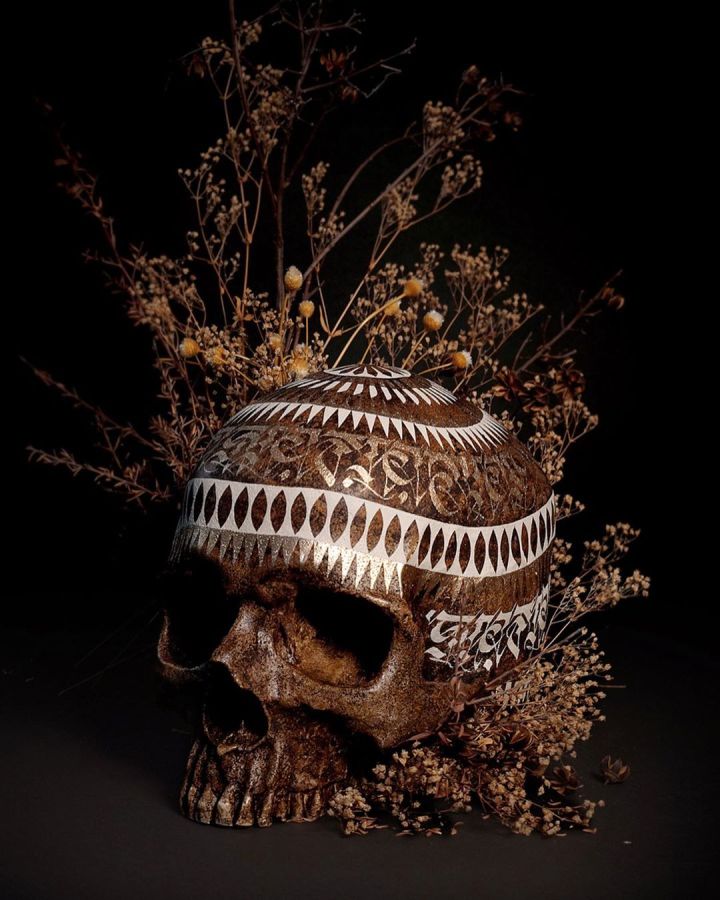
LA-based artist Cryptik explores impermanence – a world beyond notions of life and death – in his first solo exhibition, Impermanent Nature.
In Impermanent Nature, which is currently on display at Galerie Itinerrance in Paris until 19 October, Cryptik takes the law of nature – “all that exists is impermanent; nothing lasts forever” – as his starting point to honour the cycle of life throughout the exhibition.
“It is a search for wisdom and beauty in the transient with the understanding that through anicca all things are possible. From the birth of stars, to our beating hearts, to every breath we take, anicca is what allows life to happen – impermanence is life.
“By deepening our insight into impermanence, we can discover a world beyond notions of life and death, where there is no-birth and no-death, only continuous becoming. All physical and mental phenomena are transient, they come into being and dissolve away. Attachment to things that are impermanent and changing ineviteably leads to suffering.”
“It is a search for wisdom and beauty in the transient with the understanding that through anicca all things are possible. From the birth of stars, to our beating hearts, to every breath we take, anicca is what allows life to happen – impermanence is life.
“By deepening our insight into impermanence, we can discover a world beyond notions of life and death, where there is no-birth and no-death, only continuous becoming. All physical and mental phenomena are transient, they come into being and dissolve away. Attachment to things that are impermanent and changing ineviteably leads to suffering.”
“We must cultivate and nourish our insight into impermanence if we are to live more deeply and suffer less,” Cryptik added. “Through observation and understanding we can experience the nature of impermanence and release ourselves from the sorrows of human life, achieving liberation from the process of anicca.
“’Behold, O monks, this is my last advice to you. All component things in the world are changeable. They are not lasting. Work hard to gain your own salvation.’ These were the last words of the Buddha.”
Cryptik’s exhibition Impermanent Nature is currently on at Galerie Itinerrance in Paris until 19 October
Rosa Medea is Life & Soul Magazine’s Chief. She writes about lifestyles including sustainable and green living. She also offers content services to businesses and individuals at Rosamedea.com
Over the summer, I spent the weekend at a beautiful farm with my family for a family reunion. That land had gifted me, and all of us, much that weekend. I had found some stunning new stones for pigments, I had spent tranquil time on the lake, and I had talked with many of the […] […]





 nishadesigns.com