Fiber Artists- Sheila Hicks- Nisha Designs

Hicks, who has made fiber the foundation of her practice for 60 years, is one of the world’s most celebrated artists.

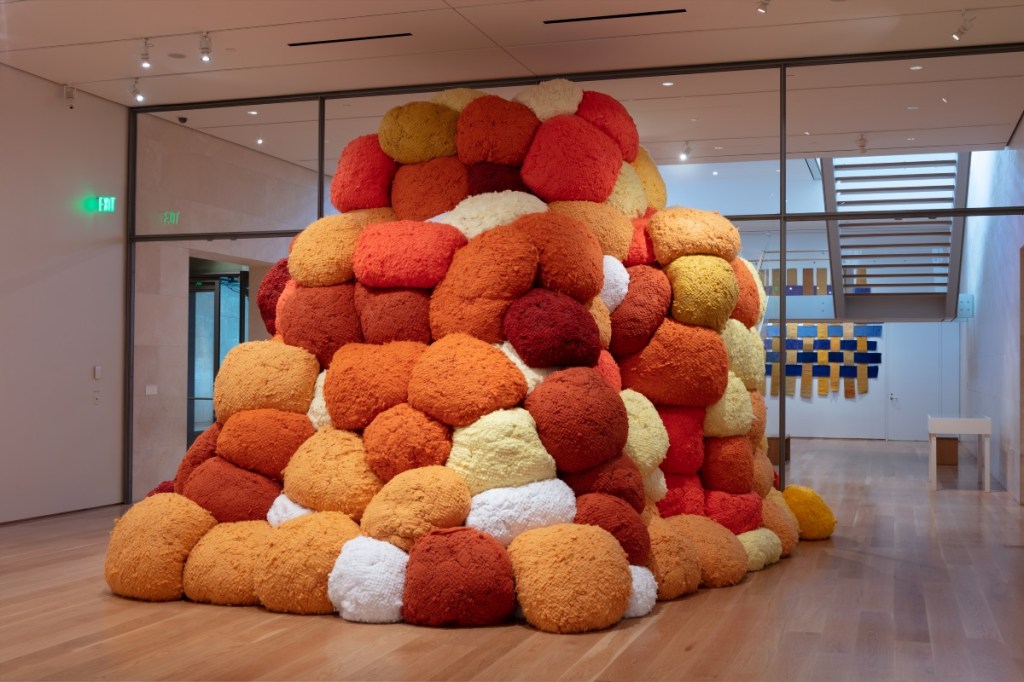
Sheila Hicks, Abacus Lino Rising, 2019.
Sheila Hicks, Seven Magic Rain Dances (detail), 2019.
Sheila Hicks, Sentinel of Saffron, 2018.
Sheila Hicks, Chaine et trame interchangeable, 1983-2016.

Installation view, Sheila Hicks at the Nasher Sculpture Center.

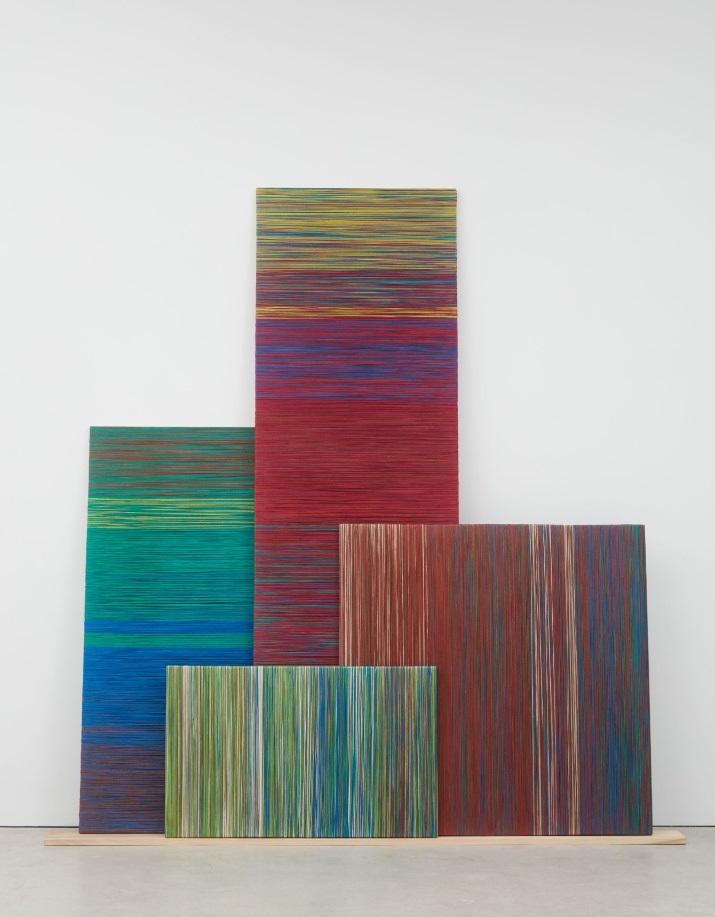
Sheila Hicks (all), Sober Streak Green, 2019; Sober Streak Violet, 2019; Sober Streak Blue, 2019.
Sheila Hicks, Multi-colored Minime, ca 1962.
Sheila Hicks, Zapallar, 1958 (left);, Cluny II, 2008.
Sheila Hicks, Prayer Rug, 1965.
Sheila Hicks, North South East West, 2017-18.
Sheila Hicks, Sunset Pavilion Inhabited, 2015.
Sheila Hicks, May I have This Dance, 2011 (as installed at the ICA Philadelphia).

Source: https://www.sheilahicks.com/

From Ancient Egypt to Teotihuacán, Centuries-Old Palettes Illuminate the Role of the Painter- Hyperallergic- Nisha Designs

“Paint Box” (1302–1070 BCE), Egyptian, ceramic and pigment cakes, 2 5/16 x 8 11/16 x 2 3/16 inches, RISD Museum (courtesy RISD Museum)

Despite all of the ancient painted objects in our museums, it’s rare to see an actual paint set.

For all the paint fragments found throughout the ancient world, on murals, pottery, sculpture, and scrolls, surprisingly few ancient paint palettes have been uncovered. Ancient palettes in the collections of the Metropolitan Museum of Art in New York, the British Museum in London, and the Louvre in Paris — among other institutions — number in the single digits. This is even more surprising now that scholars know ancient Greek and Roman statues were vibrantly painted. 

The palettes we do have, many of which still contain traces of original pigment, show us how people painted, but they also tell us about the role of the painter in ancient civilizations.


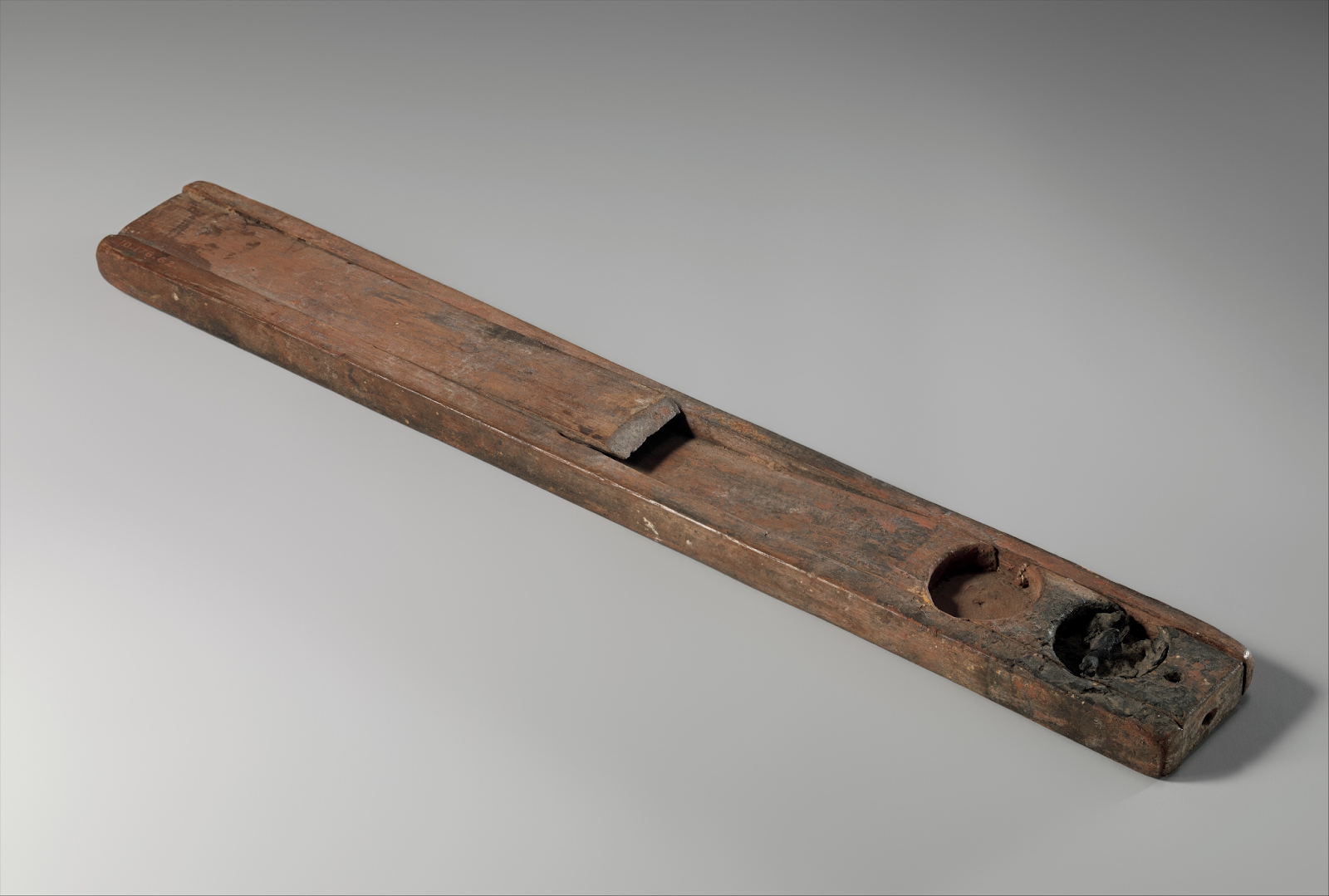
“Scribe’s Palette” (ca. 2030-1550 BCE), Egyptian, wood and pigment, 13 5/8 x 1 11/16 x 11/16  inches, Metropolitan Museum of Art (courtesy Metropolitan Museum of Art)

Most of the existing paint boxes and palettes are Ancient Egyptian: They belonged to scribes, tomb painters, and recreational painters of the upper classes. Some include the original brushes — for scribes, pen-like lengths of rush grass, and for professional and recreational illustrators, thicker bundles of grass to compose larger images.


“Paint Box of Vizier Amenemope” (ca. 1427-1401 BCE), boxwood with inscription inlaid in Egyptian blue, 7/8 x 8 1/4 x 1 7/16 inches, The Cleveland Museum of Art (courtesy Cleveland Museum of Art)

Scribes’ palettes mostly held only red and black pigments and many bear inscriptions of the king’s name, suggesting the importance of the scribe in the eyes of the ruler. Inscriptions with the king’s name — as in a palette at the British Museum featuring hieroglyphs in high relief that read “the perfect god, lord of the Two Lands, Nebpehtire, s[on of Ra, Ahmose]” — may have noted that the owner was the king’s official scribe and suggest that perhaps the king himself gave the palette to the scribe.

An Ancient Egyptian painting palette owned by a professional painter and housed at the Met also bears the king’s name, but one at the Cleveland Museum of Art includes the name of the owner himself, signifying it was likely used for leisurely painting. Unlike scribes’ bicolor palettes, recreational and tomb painters used a wider range of colors, all naturally occurring besides so-called “Egyptian blue.” 

Replacing the expensive lapis lazuli, Egyptian blue was a synthetic compound made by heating malachite, sand, and other materials to a temperature of 1,500-2,000 degrees Fahrenheit. The method was adopted by the Ancient Romans, but by the Middle Ages, the process was lost, and painters relied once again on the prohibitively expensive lapis lazuli.


“Painter’s Palette Inscribed with the Name of Amenhotep III” (ca. 1390–1352 BCE), ivory and pigment, 6 7/8 x 1 3/4 inches x 3/8 inches, The Metropolitan Museum of Art (courtesy The Metropolitan Museum of Art)

In Ancient Egypt, blue was used to paint the gods (red, yellow, black, and green all came from the ground, making them unfit to depict deities). This concept is seen again in Christian art centuries later, with Mary and Jesus repeatedly depicted in blue. 

Across the world and made centuries after the Egyptian palettes, another ancient paint setlinks the painter to the divine. 

Source: https://hyperallergic.com/719033/centuries-old-palettes-illuminate-the-role-of-the-painter/

TONO- Red Sky Performance- Ritual Drama Dance- Nisha Designs

This new outstanding dance creation by Red Sky, a Toronto based contemporary dance and theater company, brings together the Indigenous cultures of Canada, Mongolia and China and is heavily grounded in the theme of horse culture. Sandra Laronde, artistic director of Red Sky, explains the creative process behind Tono, an innovative three-country project involving eleven dancers and musicians.

Dance has always played a vital role in Aboriginal cultures. It is a connection to the spirit, to the land, and a deep expression to our gratitude. In the Indigenous worldview, the horse is revered and respected. When one thinks about the horse at war, at play or as a helper of humankind, we realize the horse has made a considerable contribution to civilizations around the world.

Importance of dance to Indigenous peoples: Why We Dance: https://www.facebook.com/watch/?extid=NS-UNK-UNK-UNK-AN_GK0T-GK1C&v=994207011501470

Source: http://www.redskyperformance.com

Waterlight- Provides Electrical power using only salt water-Nisha Designs

HOW IT WORKS?

Born from something natural and evolves into something astonishing.

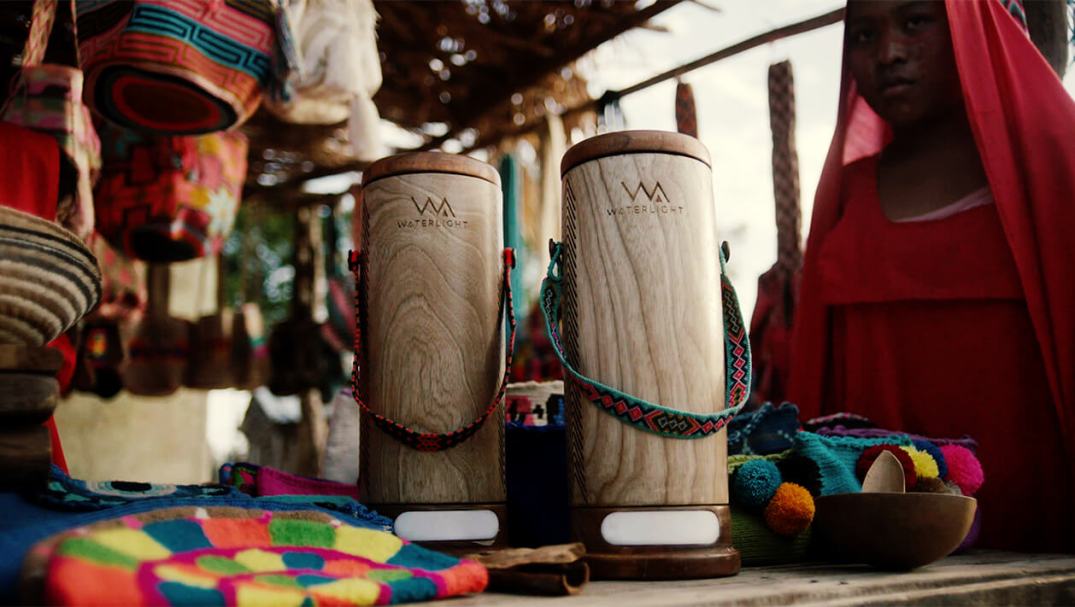
This project was born in April 2016 and consists of a specially designed electronic circuit that manages to extend the transfer of ions from a saline medium to convert them into useful and immediate energy. The electrodes of the salt bridge make it possible to drain energy from the salt water, (a known process), but with the electronic circuit with which it is possible to extract around 500 watts for each liter of water. The prototypes that we have developed are portable equipment weighing around 2 kilos. These teams can be scaled up to industrial production quickly. The Waterlight project can be scaled up vertically and horizontally in many ways.

  • As goals for the immediate future, to connect several units to a central base and in this way produce and extract greater amounts of energy.
  • A second goal is to be able to make plants on the shore of beaches to produce energy in significant quantities, continuously and for immediate use or to store in accumulators. The effluents from this process provide additional value by becoming fertilizers or drinking water, the energy of which for the desalination process comes from the same equipment.

Salt water is abundant and covers 73% of the earth’s surface. We can immediately extract 2 kilowatts from a cubic meter of salt water. We can extend this extraction for 10 continuous days, but ideally it should be a 24-hour process to change the saline medium and then reload it. In the development of small units, the Waterlight project provides an immediate solution that can directly benefit communities that lack lighting and a small electrical source; It can supply light and it can also be the electrical source where they can charge a cell phone or listen to a radio. The Waterlight for individual use also has applications in the field of recreation (camping), navigation (at all levels) and education (turning on a computer or a television). The project has a PCT Patent pending.

ANCESTRAL CONNECTION

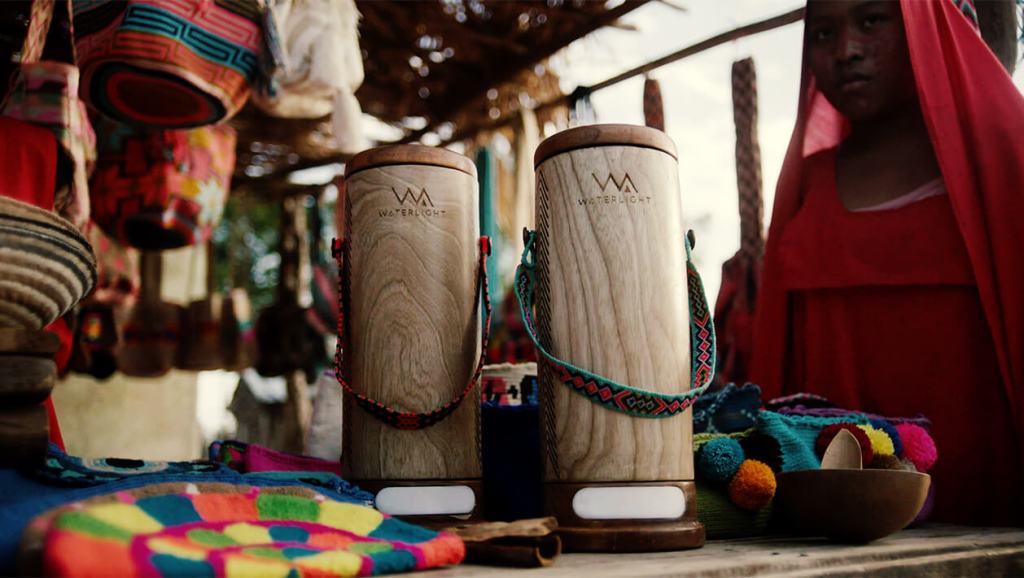
The design is inspired by the Colombian Wayúu community and their ancestral connection with the sea.

RECYCLABLE

Assembled with 100% recyclable materials.

TRADITION

Strap knitted with kanas figures, millenary Wayúu handicrafts

WATERPROOF

Outdoor water resistant.

Source: https://www.waterlight.com.co/#inspire

Spring Equinox/Ostara Celebrations Now — Ravenhawks’ Magazine Magick for Mind Body and Soul

Spring Equinox/Ostara How to Celebrate Now The Spring Equinox is a time of new beginnings, of action, of planting seeds for future grains, and of tending gardens. Spring is a time of the Earth’s renewal, a rousing of nature after the cold sleep of winter. Eggs and Egg Baskets, coloring eggs, bird watching, egg hunts, […]

Spring Equinox/Ostara Celebrations Now — Ravenhawks’ Magazine Magick for Mind Body and Soul

Spring Equinox Celebrations — Ravenhawks’ Magazine Magick for Mind Body and Soul

Spring Equinox Celebrations in the past For early Pagans in the Germanic countries, this was a time to celebrate planting and the new crop season. Typically, the Celtic peoples did not celebrate Ostara as a holiday, although they were in tune with the changing of the seasons. Persian kings known as the Achaemenians celebrated the […]

Spring Equinox Celebrations — Ravenhawks’ Magazine Magick for Mind Body and Soul

World’s Oldest Trees- Beth Moon- Photography- Nisha Designs

Ancient Trees: Woman Spends 14 Years Photographing World’s Oldest Trees

Beth Moon, a photographer based in San Francisco, has been searching for the world’s oldest trees for the past 14 years. She has traveled all around the globe to capture the most magnificent trees that grow in remote locations and look as old as the world itself.

“Standing as the earth’s largest and oldest living monuments, I believe these symbolic trees will take on a greater significance, especially at a time when our focus is directed at finding better ways to live with the environment” writes Moon in her artist statement.

Ancient Trees: Woman Spends 14 Years Photographing World’s Oldest Trees

Sixty of Beth Moon’s duotone photos were published in a book titled “Ancient Trees: Portraits Of Time”. Here you can have a sneak preview of the book, full of strangest and most magnificent trees ever.

Ancient Trees: Woman Spends 14 Years Photographing World’s Oldest Trees

Source: https://www.beautyofplanet.com/a-woman-spent-14-years-photographing-our-planets-oldest-trees-and-here-are-the-results-3/

To-Dos: Your March Home Checklist — Wyndesong’s Place — ravenhawks’ magazine Magick for Mind Body and Soul

Get ready for sunnier days, whether you have an hour or a weekend to spare The first official day of spring is March 20. So whether there’s still snow on the ground or flowers in bloom, you can rest assured that nicer weather is on its way. […] To-Dos: Your March Home Checklist — Wyndesong’s […]

To-Dos: Your March Home Checklist — Wyndesong’s Place — ravenhawks’ magazine Magick for Mind Body and Soul

Goofy Topiary and Walt Disney World 50th Anniversary Celebration Cake- Disney Park News- Nisha Designs

With the 2022 EPCOT International Flower & Garden Festival comes plenty of topiaries inspired by Disney characters.

Sorcerer Mickey Mouse, Brooms, Ostriches, Hippo and Gator – Entrance to World Showcase

The stars on Mickey’s hat light up.

Woody, Bo Peep and Her Sheep – near The Land Pavilion

Mickey Mouse, Minnie Mouse, Donald Duck, Daisy Duck, Huey, Dewey and Louie – Bridge to World Showcase

Pluto and Chip ‘n’ Dale – The American Adventure Pavilion

Buzz Lightyear – near Mission: SPACE

Figment – near Imagination!

https://9e1063ea1ec64c02984d4fc7d6131e0f.safeframe.googlesyndication.com/safeframe/1-0-38/html/container.html

The Three Caballeros (José, Donald, and Panchito) – Mexico Pavilion

Anna and Elsa – Norway Pavilion

Troll – Norway Pavilion

Dragon – Japan Pavilion near Torii Gate

Pandas – China Pavilion

Simba and Friends (Rafiki, Simba, Mufasa and Sarabi) – Between Imagination! and The Land Pavilion

Pumbaa and Timon – Between Imagination! and The Land Pavilion

Snow White and the Seven Dwarfs – Germany Pavilion

Dopey’s lantern actually lights up.

Lady and the Tramp – Italy Pavilion

Beauty and the Beast – France Pavilion

Lumiere and Cogsworth – France Pavilion

Kermit the Frog and Miss Piggy – Germany Pavilion

Peter Pan, Captain Hook, and Tick Tock Croc  – Between the United Kingdom and Canada Pavilions

Winnie the Pooh and Friends (Rabbit, Eeyore, Piglet and Tigger) – United Kingdom Pavilion

Tinker Bell’s Fairy House Garden – United Kingdom Pavilion

Bambi and Friends – near Imagination!

Source: https://wdwnt.com/2022/03/all-topiaries-at-the-2022-epcot-international-flower-garden-festival/