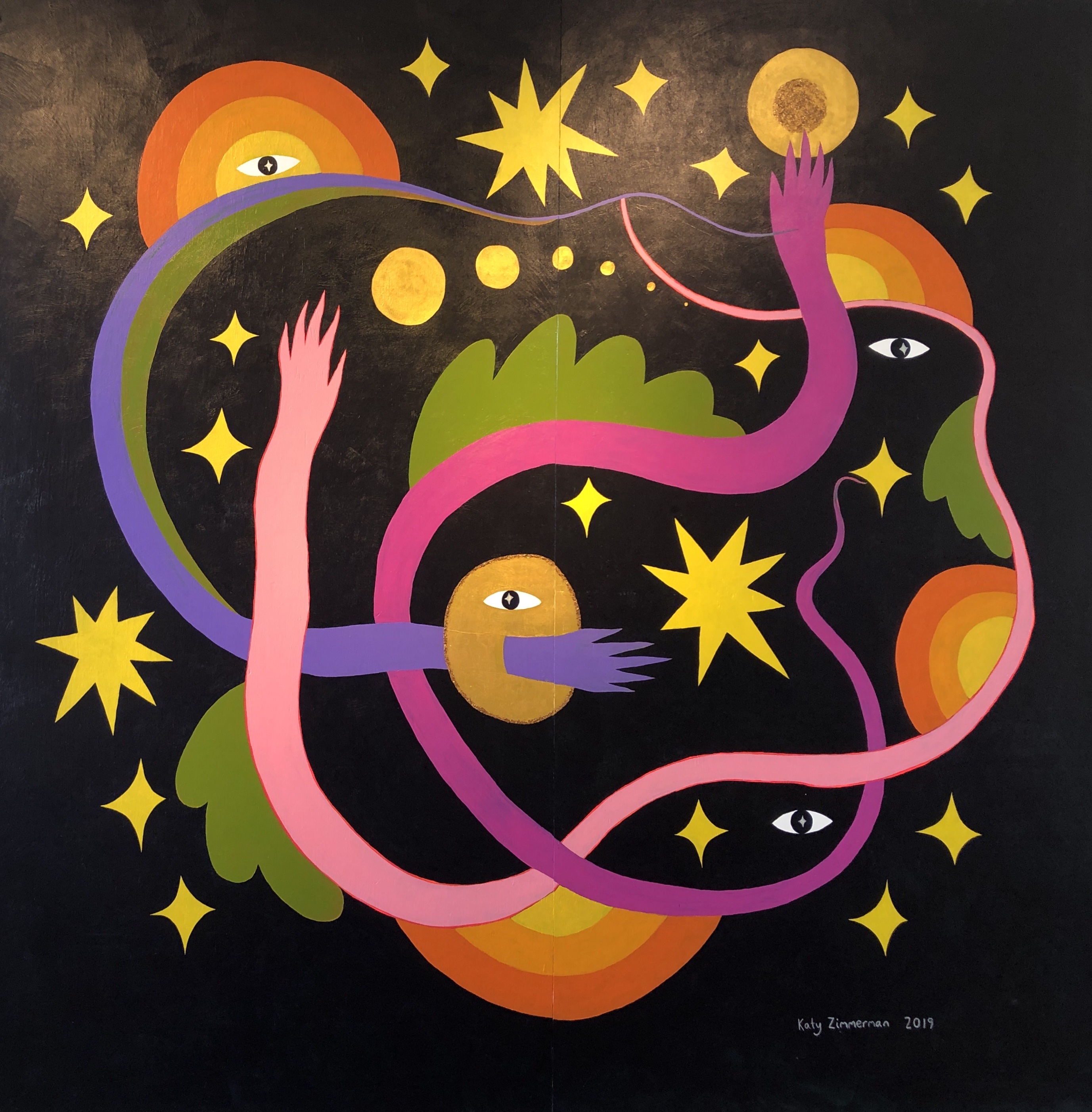
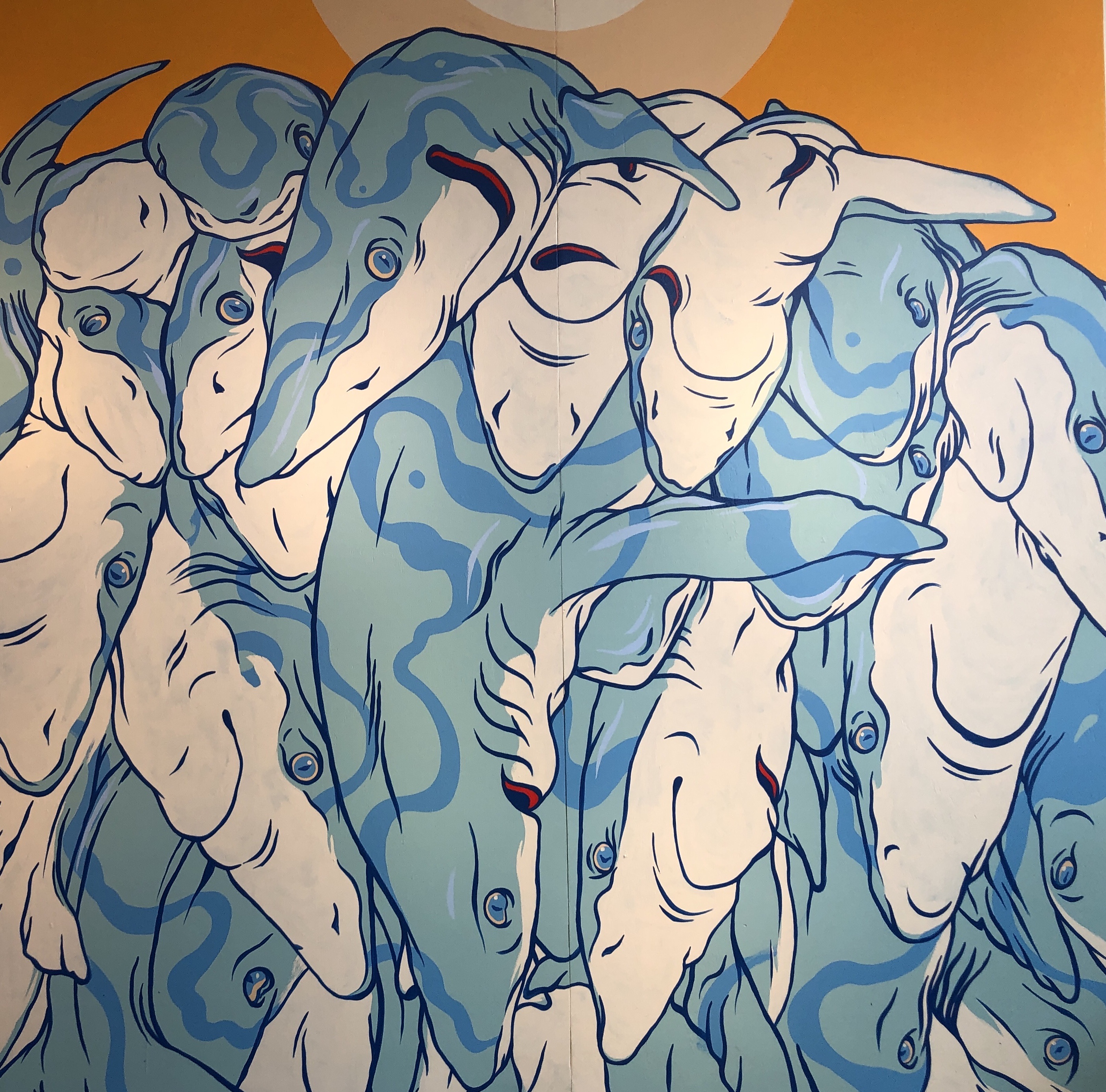
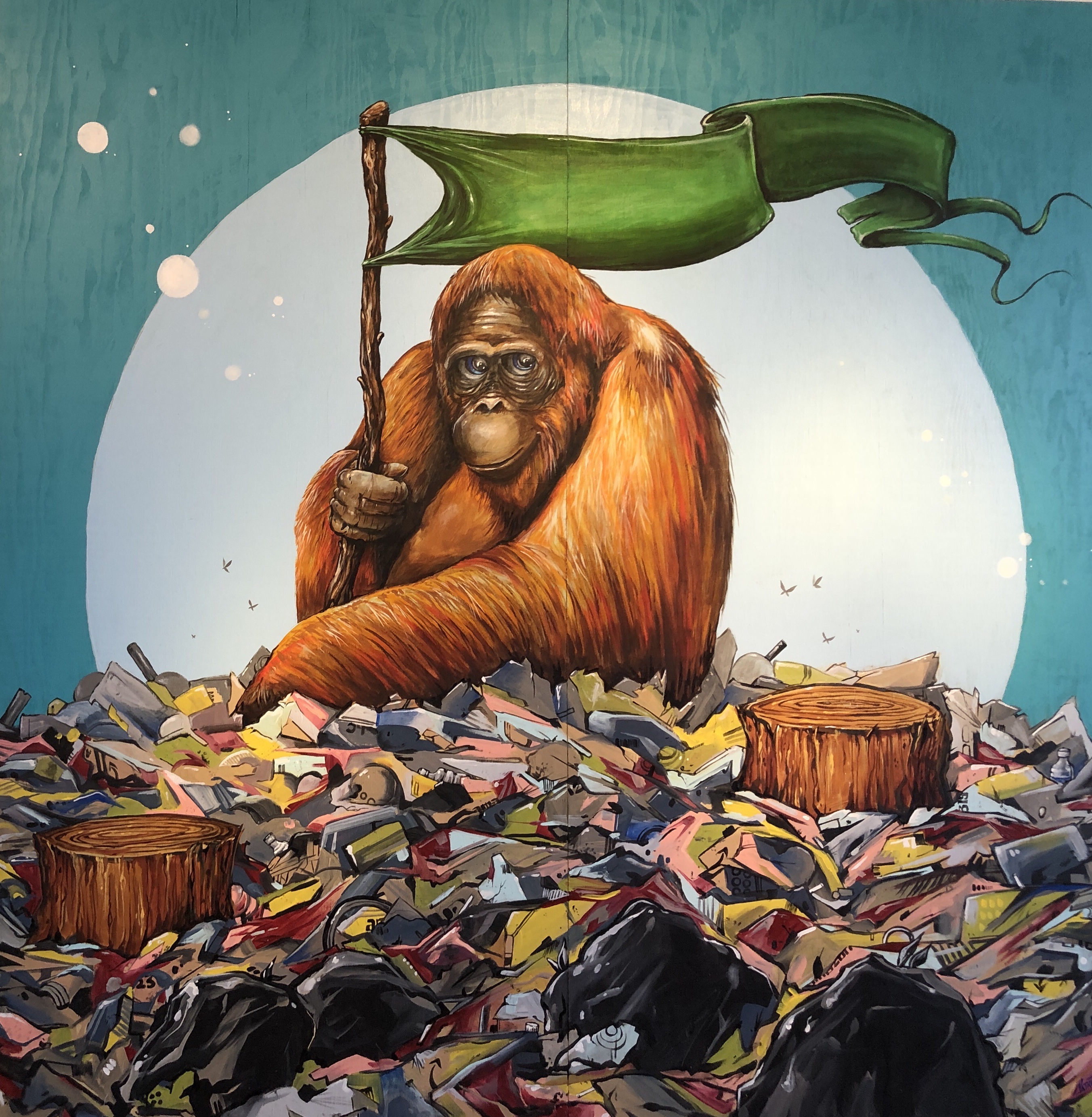
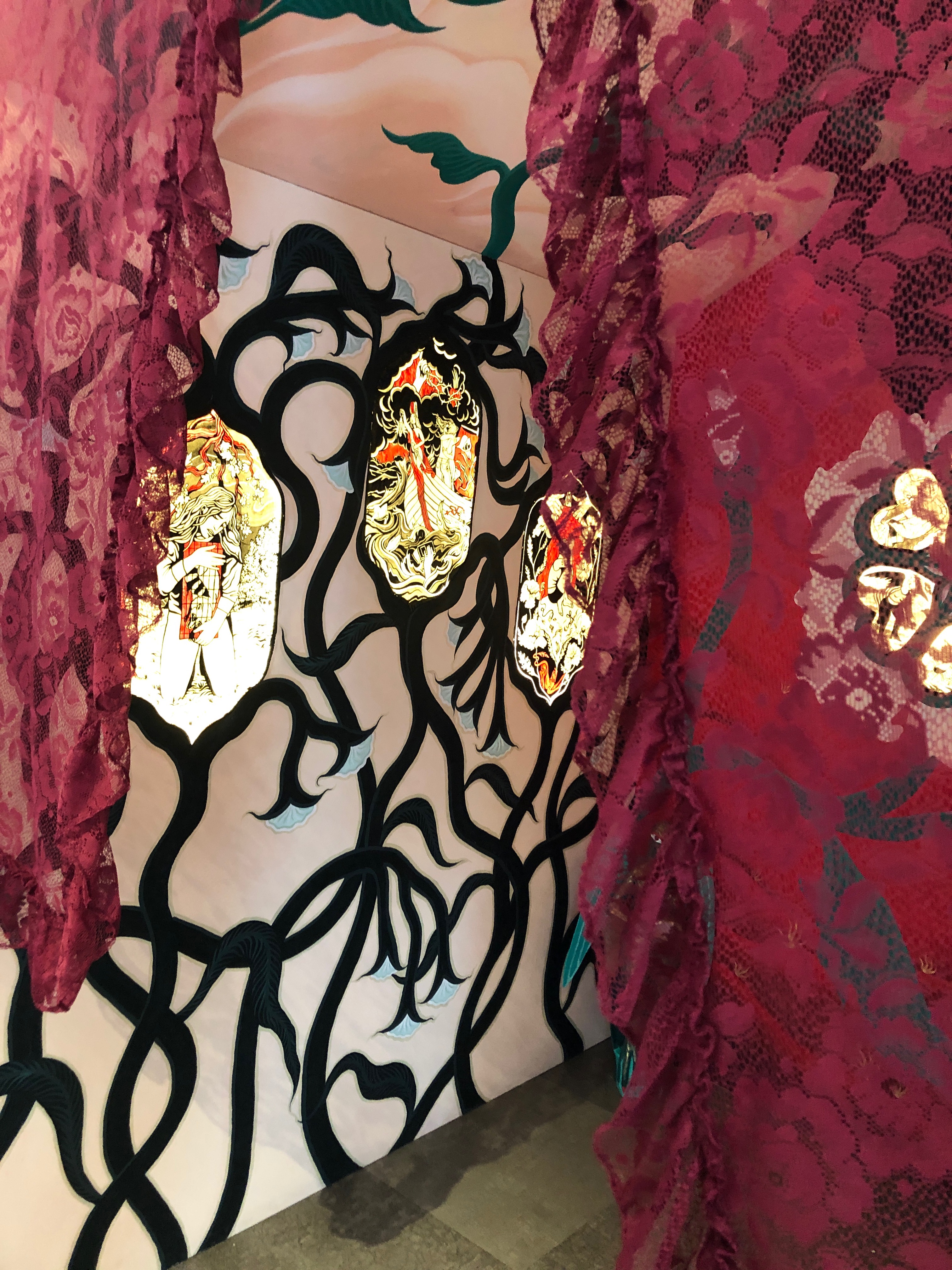
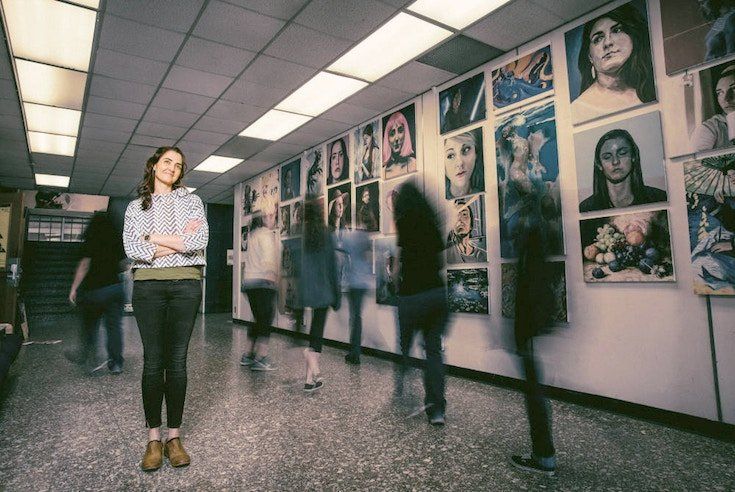
The Triumph of imagination and individuality. These beautiful artist of boulder, colorado have created amazing art to inspire dialogue and model pathways toward a more empowered, positive culture though art.
Street Wise is an art experience driven by social activism. Art as activism or Artivism is a way to heal and restore our sense of personal power as well as create positive change. “Street Wise” hopes to encourage conversations about important issues that affect our culture, using art as a catalyst. Street art has a rich history in activism and social commentary and it is constantly evolving alongside society- Canyon Gallery, Boulder
Katy Zimmerman- Transmutation. You are vast and full of identities not yet explored. you will ultimately grow and change to fill them. You are scared, you are powerful. Lindee Zimmer- Don’t Ignore This Crisis. We have one earth and we must respect it.This is not a drill this is an emergency. This change nature is experiencing is a direct result of humans. How will you act in a crisis?Jessica Moon Bernstein-SchianoMax Michael Coleman- Tipping Point/ Stacked- These Blue Sharks portrayed, like almost all other deep water shark species are harvested in mass. It is estimated that 100,000,000 sharks are killed annually for either soup or the cosmetic and pet food industry. It is a travesty of a monumental scale imposed upon our oceans by humans. However, just as it has been imposed, it can be remedied. We are at a tipping point with our oceans, just as these beautiful noble creatures you see before you are tipping, spilling, and leaving Earth. It is our duty to spread awareness and pass judgement on this ignorance and correct it. You the public reading it, it is in your hands. I have given you my painting, I have you my sentiment, my words, my time. Now i ask you to lend me your hand. Patrick Maxcy. Survival- “This piece was inspired by decline in suitable orangutan habitat, which has landed the animal on the critically endangered list. Deforestation, brought on by legal and illegal to make way for oil palm plantation and other agricultural plantations, is a threat to their survival. In this pieces, pollution has replaced the forest floor. But the Orangutan sits wisely atop the trash pile ready to claim back his home.”Johnny Draco. Wedge In Flight. This piece explores inclusivity through the lens of race seen by the eyes of modern day society. Jessica Moon Bernstein-Schiano- The lack of sea ice was making it more difficult to get around. Niamh Rita- The Chapel Of Femme. The Chapel of Femme is a place of reflection. Inside, you will see imagery that narrates some aspects of the queer femme experience. You need not be queer, femme, or a (non) believer os any specific faith to enter this space. All you are asked is to carry with you a spirit of respect and curiosity while you are within the walls of the chapel.
11.18.19 Hello again… Shadow Spotlight Week, featuring Native Americans in the creative fields. I have found about several Native American artists that are making their mark in the present. Nicholas Galanin As an artist, Nicholas Galanin has utilized a wide range of tools and techniques and tapped into influences from conceptual art, pop culture, indigenous […] […]
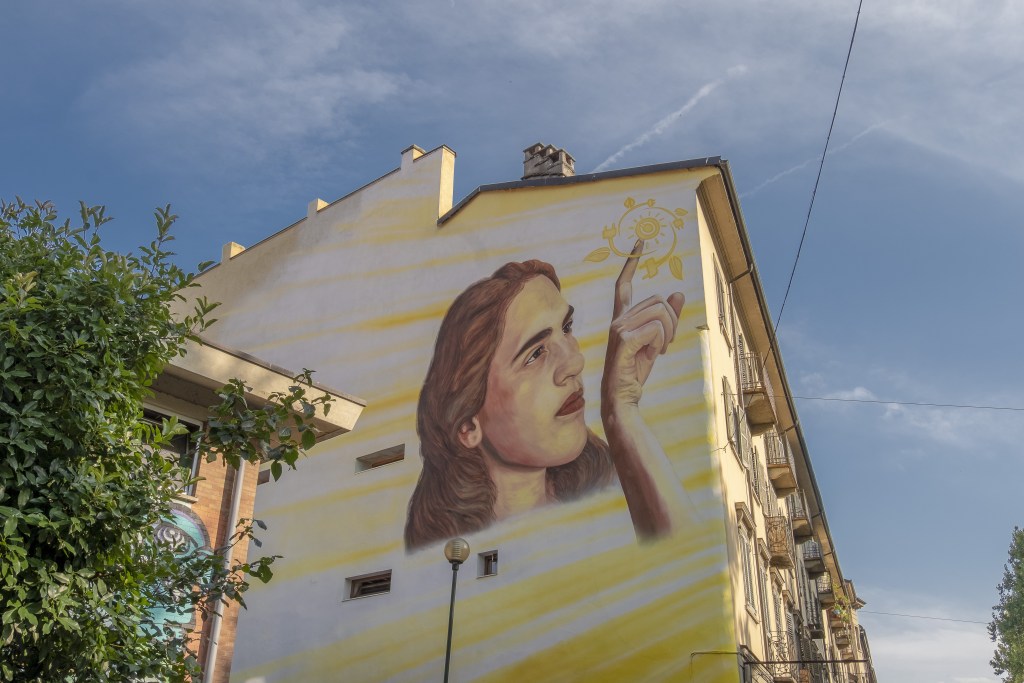
A mural created to raise awareness of the importance of sustainable energy has been created in Turin. From Barcelona based Jorge Rodriguez-Gerada. It is a piece which, according to the artist, “alludes to the importance of acting now to assure a positive outcome.” Called ‘Promise’ it features the image of a young girl. She is…
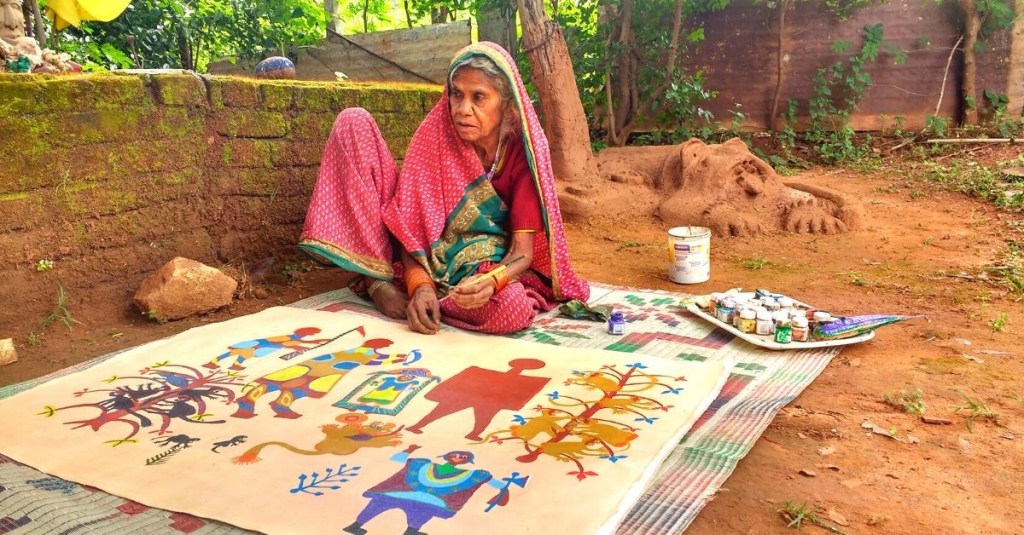
“Painting takes me to another world where I am as free as a bird,” says Judhaiya Baiga. She says this is her way of putting her village on the global map and keeping her traditions alive.
Judhaiya Bai Baiga’s painting recently travelled all the way to a Milan exhibition in Italy and was sold instantly. This was not the first time Baiga’s painting was displayed in an exhibition along with paintings of other talented artists.
A resident of Lorha village in Madhya Pradesh, 80-year-old Baiga who belongs to a tribal community, has the distinction of seeing her art travelling to several art galleries in India and abroad.
“Age or fame has nothing to do with the errors. Perfecting any art is a myth as there is always scope for improvement,” Baiga repeats the sentence from the other end of the phone in case the message was not heard.
Despite being a Diwali week, Baiga is kind enough to oblige for an interview. The excitement to share tales of her village and paintings is clearly evident in her voice.
When asked how she feels about getting international recognition, she says, “It has not changed my life as such. But yes, a change can be seen as more and more women, including my daughter-in-law are taking an interest in painting. Some of these women always wanted to paint but did not have avenues back then.”
How Age Worked In Baiga’s Favour
Baiga belongs to a tribal community heavily dependent on forest resources for their livelihood and some engage in menial jobs. Education, roads and employment are still to reach the interiors of the region.
She lost her husband when she turned 40 and now lives with her two sons. Her only daughter is now married.
Baiga decided to start her second innings with a colourful attitude, literally.
Happy in their world, her community loves to dress in the brightest and most colourful clothes and lead life with the belief that there is no substitute to hard work.
This is probably the reason why Baiga took up painting at 70, an age when most people retire and indulge in rest. But Baiga, who worked in the fields for most of her life, finds relaxation in painting.
“Painting takes me to another world where I am as free as a bird. When I learnt about a teacher who is willing to teach for free in our village, I decided to give painting a try, something I was never interested in. Yet, on the very first day, I found my passion,” says Baiga.
She joined Ashish Swami, a well-known art teacher and an alumnus of Shantiniketan, West Bengal. He runs his studio ‘Jangan Tasweerkhana’ in several tribal belts of Madhya Pradesh to prevent local cultures and traditions from becoming extinct.
“We have such rich cultures across India that are on the verge of dying. Painting is an effective means to save them. By articulating the local practices or customs in paintings, we can also tell other people about local traditions,” Swami tells TBI.
Almost a decade ago, Swami opened a studio in a small room of Baiga’s village. He teaches painting for free and also helps them get fair monetary value through art dealings. Close to 15 local women have been a part of Swami’s classes for the past ten years.
Swami, particularly enjoys teaching people from Lorha village because of their peculiar imagination that colours the canvas.
“Even if they draw something as basic as a tree, their outlook is so different from the rest. They manage to capture innocence in wild animals and serenity in clouds. Their definition of a perfect nature lies in the harmony or co-existence between trees, birds, animals, water bodies and humans,” he explains.
Initially, Baiga and Swami would be happy with whatever amount the painting would be sold at. But soon, they realised the value of the paintings and stood firm on their quotations.
“Paintings are sold on craft and not on how creative they are. We are trying to change that and promote creativity by taking the painters to exhibitions that take place across India. Currently, paintings by Baiga are valued anything between Rs 300 to Rs 8,000,” he says.
While Baiga is content with the money her paintings are making, it is not the motivating factor behind her passion. For Baiga, its her way of putting her village on the global map and keeping traditions alive.
People like Baiga prove that there is no age to learning, and even nature can educate, one only has to be receptive.
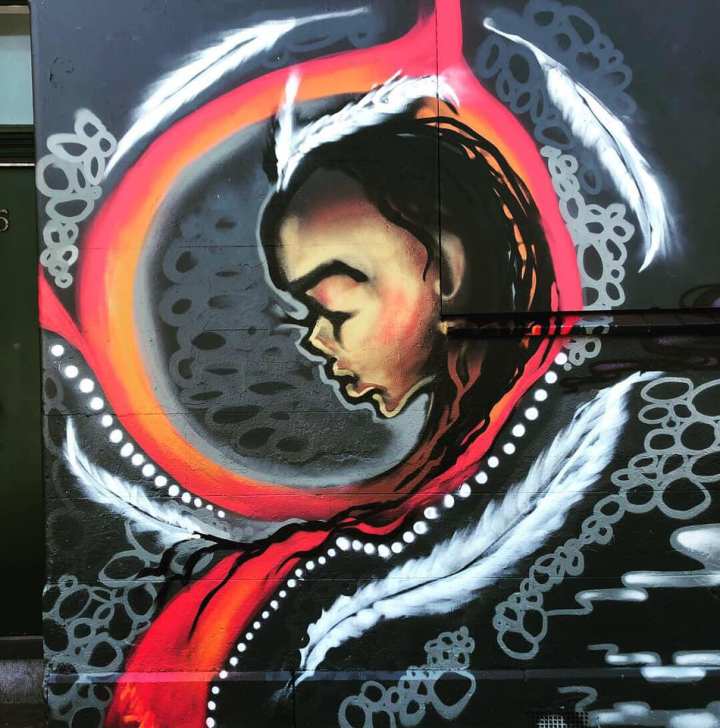
Narisha “Nish” Cash, an Aboriginal self-taught female graffiti artist from Adelaide, is challenging the misconception that the world of graffiti and street art is a “man’s world”.
The Jingili and Mudburra artist has been a regular on the street art scene in the South Australian city since the 1990s when at the age of 15 she first started paving street walls with her work. With her tag ‘ISHK’ (the sound of a spray can), her art has evolved over the years to include themes of femininity, colour and form, nature and her aboriginal culture.
In an interview with SBS, she said: “I usually paint strong powerful women with elements of strength and tough qualities through guns, bandanas, and piercings. What appeals to me of the female form is that it’s the giver of life, its Mother Nature, its beauty.
“I’ve always been surrounded by strong women and it’s important for my characters speak that. There’s a lot of strength around being a woman, especially an Aboriginal woman.”
After becoming a mother, Narisha Cash saw the opportunity to channel her creative practices into a career. She also used her art as a form of healing to overcome obstacles she encountered as a teen and young woman growing up in Adelaide.
She said: “When I started out doing graff there wasn’t a lot of females out there. I’d never thought I’d make a living out of it.”
Inspired by hip hop and breakdancing culture also, it was the artist’s foray into grafitti that opened her up to delving into breakdancing, DJing and MCing.
A well respected and maternal figure in communities across Australia, Narisha Cash also works as Community Arts and Youth Engagement Officer at Tandanya National Aboriginal Cultural Institute. She shares her knowledge as an artist with youth groups and engages them through art workshops, developing and creating public art murals and opportunities for emerging artists and young people at risk.
Taking graffiti art in the context of the coded language of the streets, the Aboriginal artist, with her unique and feminine style of aerosol art, relates her practice to her ancestors creating art work – storytelling, culture and symbolism – to communicate through their natural surroundings.
Narisha Cash believes that grafitti has the ability to connect young people, especially indigenous youth who feel disconnected to culture, in a way that inspires, empowers and educates.
She told SBS: “It gives them something to do that’s positive, rather than turning to grog (alcohol) or drugs, enabling kids to turn to music, dance, painting.
“In our culture, we have the dance, music and arts so it’s important for young people to get themselves out there and be that next generation to get out there and carry that positive torch on and be positive with their outlet.
“I think it’s important for young people to have a variety of ways to express themselves, be it creating public art or transporting spaces into something beautiful.
“I want kids to get an inspiration to get a career in the artistic field and follow my footsteps…I think it’s important for youth to see Aboriginal people doing good things.”
Rosa Medea is Life & Soul Magazine’s Chief. She writes about lifestyles including sustainable and green living. She also offers content services to businesses and individuals at Rosamedea.com
It’s nearly impossible to visit Tunisia without noticing the beautiful doors. They’re everywhere. I often found myself lost in an ancient medina only to look at my camera roll and realize I’d spent the last 30 minutes taking pictures of doors.
In Tunisia, doors are symbolic reflecting the fortunes and happiness of the families living inside. They are generally built of palm wood reinforced with sheet metal. They are decorated with black studded nails to create complex geometric patterns. Occasionally some doors come with more floral patterns owing to the European influence.
When I visited Tunisia, I was just blown away by these doors. They’re so beautiful, and every city I visited tended to have its own unique style and color. Most doors are blue, but I saw yellow, turquoise, red, and white.
Some of the most common symbols on the doors are the crescent star, minarets flowers, and fir trees. Some of the doors have large archways allowing for a person to enter on a horse without dismounting.
Many will claim that the best doors are in Sidi Bou Said – the Santorini-like coastal town just outside Tunis – but I found that beautiful doors are located throughout the country. You just need to wander down the right side street to find the real treasures.
Most of the doors have two knockers – one for the men and one for the women. The ones on the left are used by the women, and the ones on the right are used by the men.
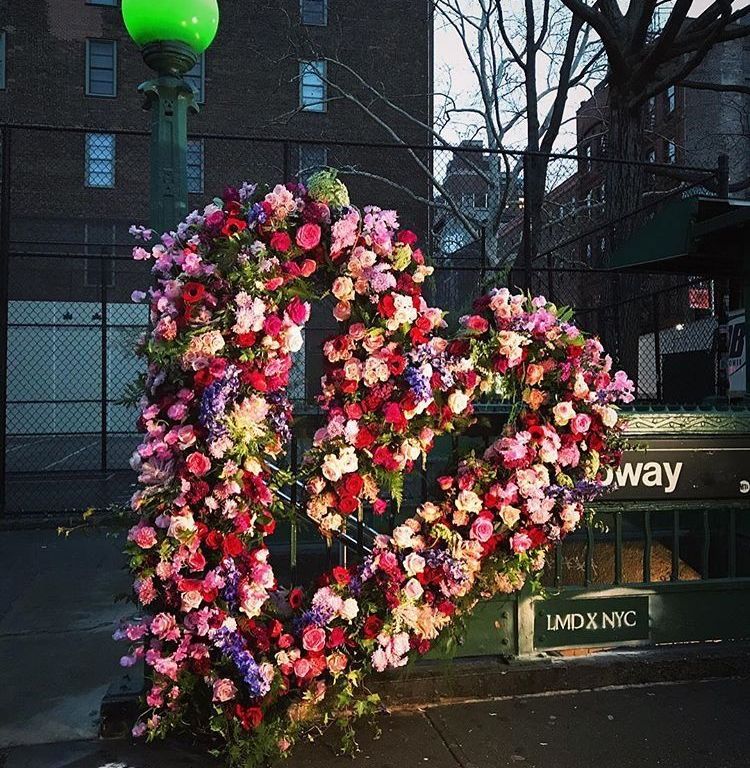
Flower flashes have been bringing some much needed colour, natural life and joy to the concrete jungle of New York, transforming trash cans into larger-than-life flower vases and embellishing the subway system.
The beautiful flower arrangements come courtesy of floral designer Lewis Miller and his team who create what they call “Flower Flashes” very early in the morning, which they aim to get finished before the daily stream of commuters hits the streets.
In addition to repurposing trash cans as flower vases, Lewis Miller Design have also used flowers to decorate a public phone booth with an abundant flow of blooms making their way on to the street.
Lewis Miller came up with the concept of flower flashes to “create an emotional response through flowers” and to “gift the people of New York the same experience he gives his paying clients”. All of the blooms used in the installations are repurposed from his company’s events. Passers-by are encouraged to admire the display and take a flower if they desire.
Rosa Medea is Life & Soul Magazine’s Chief. She writes about lifestyles including sustainable and green living. She also offers content services to businesses and individuals at Rosamedea.com
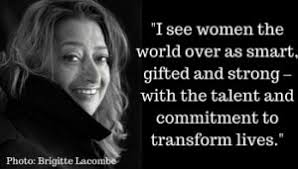
Queen of the Curve,” the late architect will be remembered for her bold, fluid designs. She is one of my favorite women in architecture.
I almost did step into the world of architecture. I had got an opportunity to spend a week in Columbia University to see if architecture was something I would be interested in. But it wasn’t for me. I have always been fascinated with creation and creating things. I thought at some point chemistry was something that will help me create to what I wanted to create. Loved equations, experiments, science. But then even that didn’t move my soul. And I finally ended up with textiles and art my soul and passion. Architecture and textiles have a lot in common. One of them being both are 3 dimensional. The love for architecture never left me as the architect of my life lived within me. Hence, I became the architect of my own life. ・・・ “Up to even twenty years ago people did not anymore believe in what I always call the fantastic, they did not think that world is possible – some people still don’t think it’s possible – and, it is!” Zaha Hadid
For most of its existence, the home textiles business—sheets, comforters, towels, et cetera—has been all about more. That took the form of everything from ever-higher thread counts (defying any known weaving technology) to bed-in-a-bag put-ups that approached the triple digits in their number of pieces, and towels that outweighed some bantam-weight boxers. More was better.
But recently, as evidenced by the wares on display at September’s New York Home Fashions Market, the industry has started to go in the opposite direction. After decades of excess, the business is finally discovering that less is, in fact, often more.
The twice-yearly trade show, held mostly in closed showrooms along Manhattan’s lower Fifth Avenue, is where big-box stores like Walmart, Macy’s, Bed Bath & Beyond and their retail brethren start buying next season’s goods. While shows in traditional market centers in Atlanta, High Point, Dallas and Las Vegas all feature higher-end soft home resources and bedding products, it is in New York where the bulk of the business in this $25 billion market segment is done.
Over the past few seasons, this sector has been in transition—working to bring to market products that appeal to the new generation of shoppers more concerned with attributes like sustainability, transparency and naturally sourced materials. It’s been an ongoing evolution, but the fall show made it apparent that the industry is heavily drinking this new Kool-Aid. In market introductions from suppliers large and small, several themes prevailed, reflecting these new sensibilities in core bed and bath products.
Sustainability and circularity: Bed and bath products have always gotten a bad rap for using too many natural resources in their production—water and land primarily—but the industry is making a concerted effort to move to a more sustainable model that emphasizes both recycled final products and individual components. Circularity, based on renewable resources as well as recycling, was a buzzword heard often in many showrooms, even if not everyone clearly understood what it meant.
Traceability: With the vast majority of home textiles products—at least 90 percent by most estimates—coming from the Asian production powerhouses of China, India and Pakistan, understanding the manufacturing chain for home textiles has often been a challenge. Using DNA marking, RFID tagging and other new technologies, vendors are now able to trace the raw materials in their products back to the growing fields, giving retailers and consumers alike a look into the entire production process.
Certification: Because there are no real regulatory or safety standards governing most soft home products, it’s always been a free-for-all on certifying products. Now, some international third-party organizations like Oeko-Tex and Global Organic Textiles Standard (GOTS) are gaining traction, often at the urging of retailers who want to offer a point of differentiation for their products. None of these labels are as well-known as established ones like the Good Housekeeping Seal of Approval or consumer electronics certifications, but they are rising in market prominence and placement.
Natural fibers and fabrics: Even though synthetic materials like polyester and memory foam are industry staples (suppliers and retailers have been wildly successful selling “micro-fiber” bedding even though it is essentially a descendent of polyester double-knit fabrics from the disco era), the raw material spectrum has dramatically increased recently, with tree-derived cellulose, linen, bamboo and other natural fibers. Cotton still maintains its overwhelming market share—but there, too, differentiators like Supima, Egyptian and Better Cotton Initiative (BCI) offerings are gaining in importance.
CBD: As part of a broader effort to jump on the health-and-wellness bandwagon, several companies introduced bedding products containing CBD extracts, either applied topically to the fabric or infused into the fibers. Without making explicit health claims—still very much illegal under U.S. laws, even as CBD itself is legal throughout the country—companies certainly implied that these products were good for you. The first wave will hit the market possibly as early as this holiday season, giving the industry a better read on consumer acceptance.
All of this attention to technology, innovation and product performance stands in stark contrast to earlier eras. Yes, there was fashion and, yes, there were plenty of designer names, but today the industry clearly is taking a different tack—one that strips products down to their essential elements, prioritizing origin and ethics over thread count or frills.
In fact, the only real exception to the less-is-more dictum came in the form of a novelty fad product, the weighted blanket. Countless companies showed heavy-weight blankets and comforters that supposedly promote better sleep. In that case, more is more. But nearly everywhere else, the less the better.
Warren Shoulberg is the former editor in chief for several leading B2B publications. He has been a guest lecturer at the Columbia University Graduate School of Business; received honors from the International Furnishings and Design Association and the Fashion Institute of Technology; and been cited by The Wall Street Journal, The New York Times, The Washington Post, CNN and other media as a leading industry expert. He was also a guest on the BOH podcast, and his Market Watch columnsoffer deep industry insights on major markets and product categories.
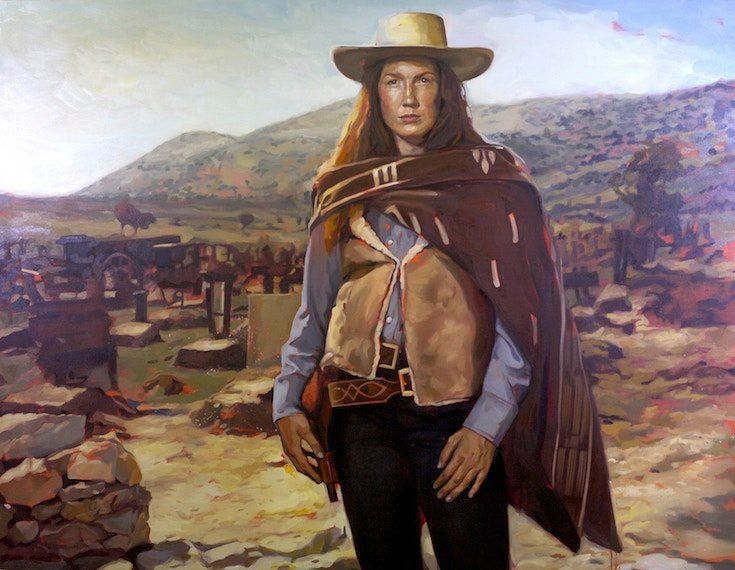
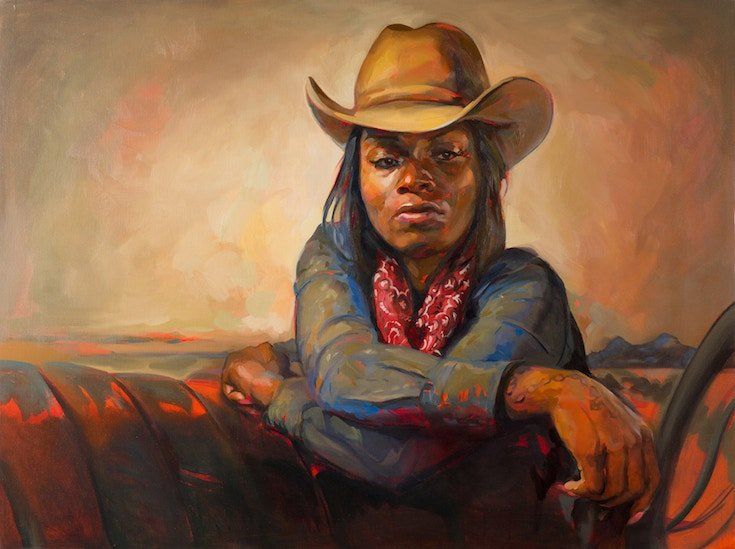
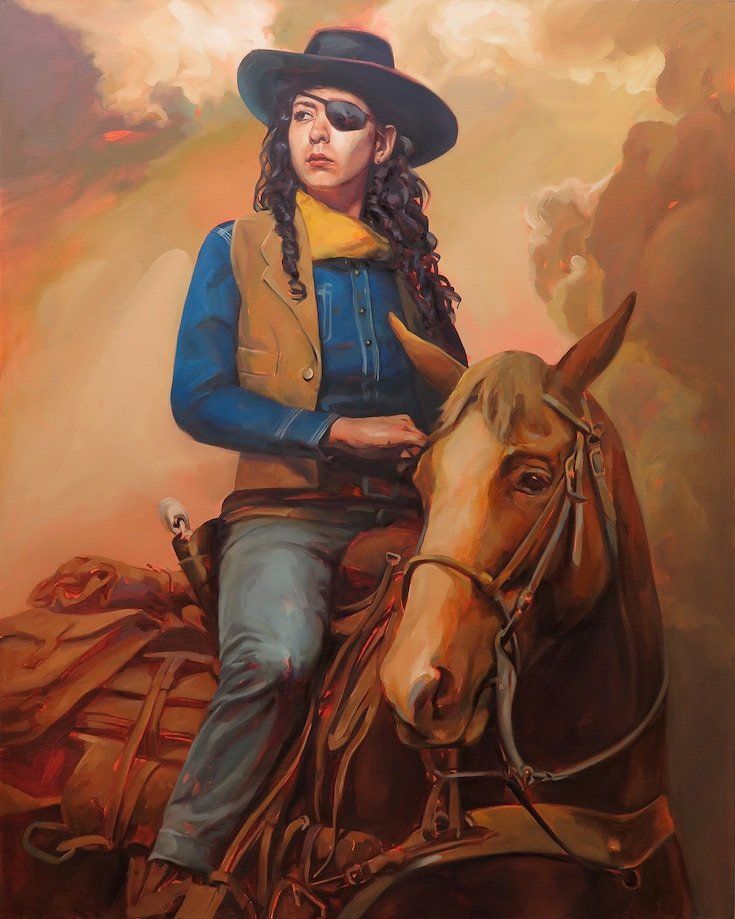
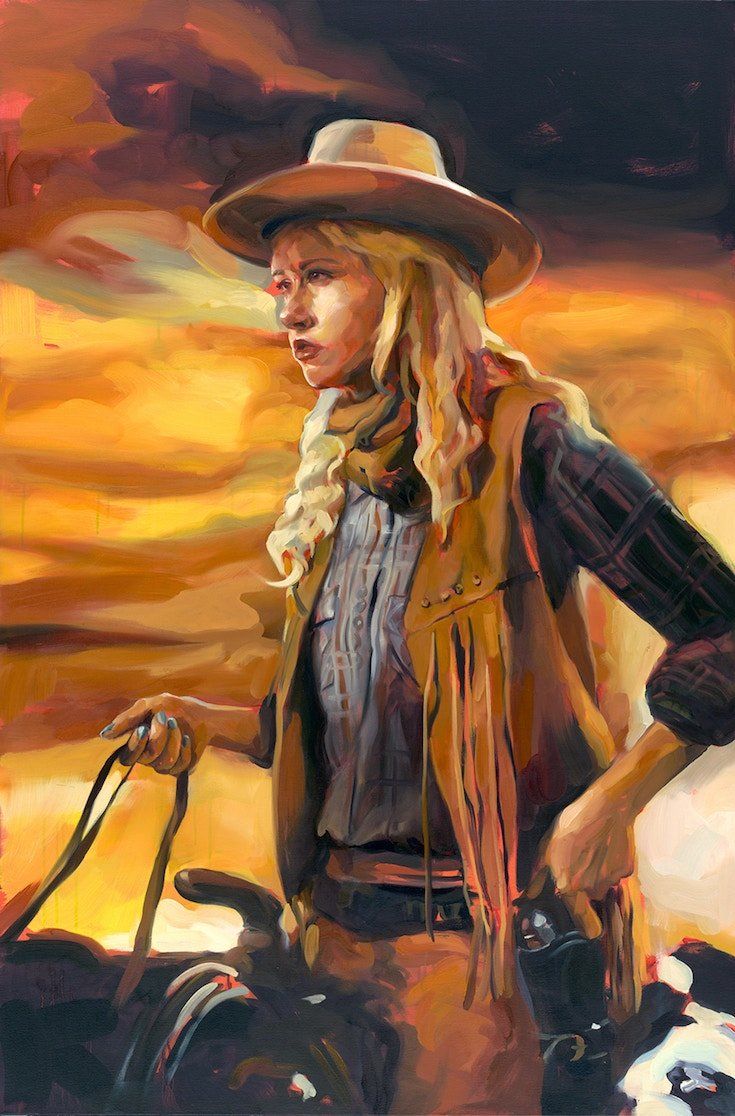
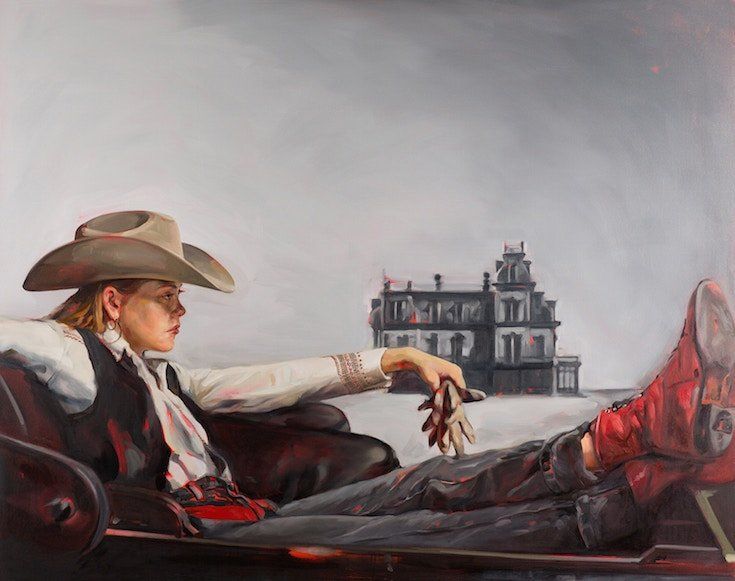
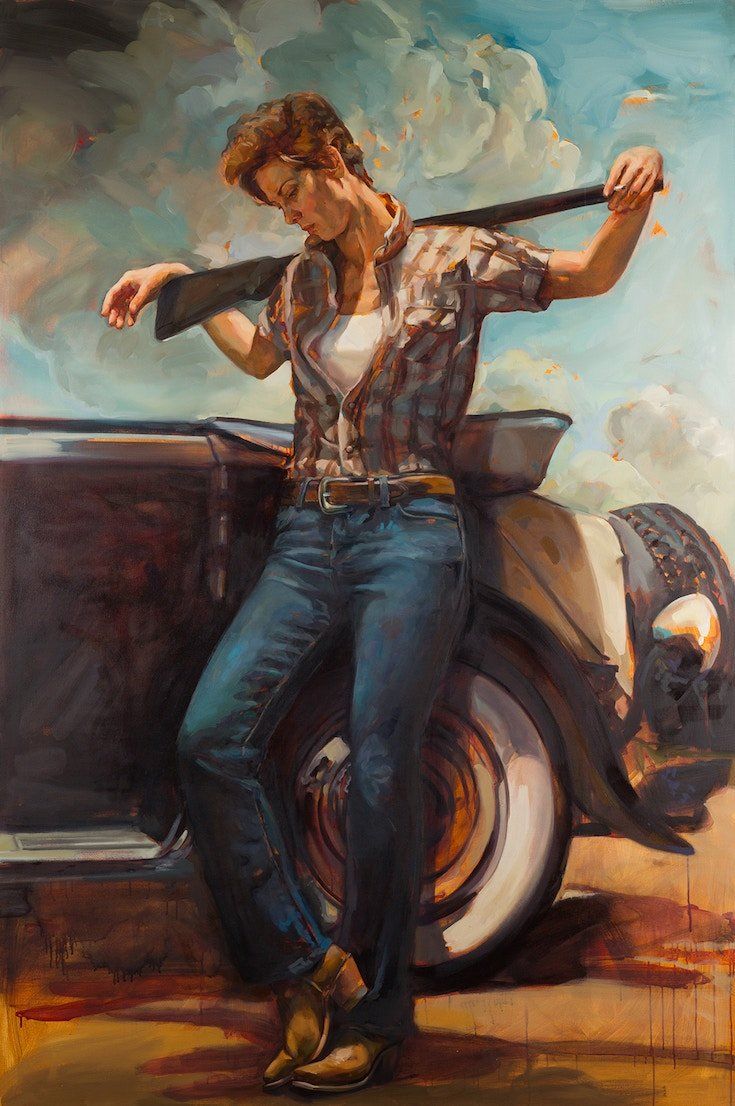
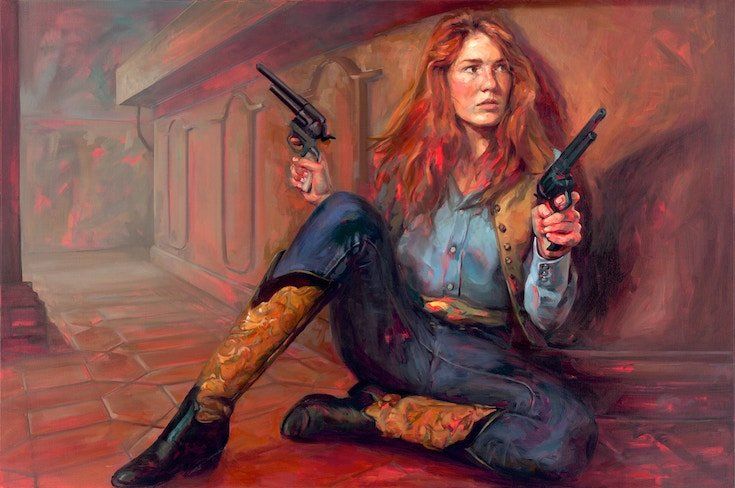
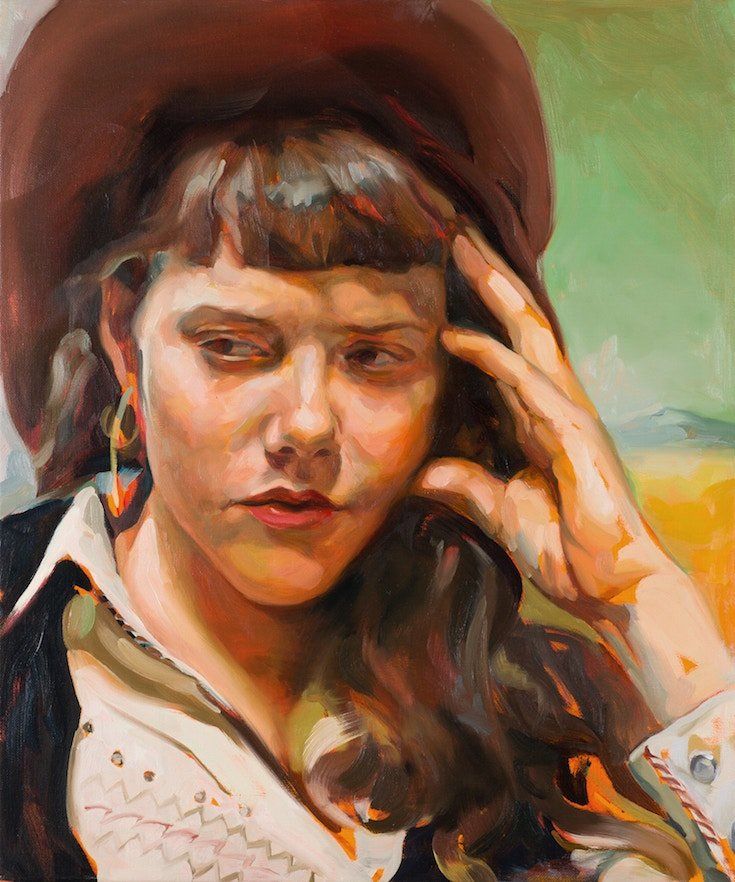
When Felice House moved to Texas from Massachusetts, she quickly fell in love with “Western” culture.
Photo by Timothy Douglas, used with permission.
House, a painter and artist, moved to Austin to study for her master’s degree before becoming an assistant professor of painting at Texas A&M University.
At first, the culture shock was fun. House says she quickly became infatuated with the Western genre: the outfits, the cowboy boots, the music.
“But when I actually got around to watching Western movies,” she adds, “I was horrified by the roles for … anybody except white men basically.”
The stoic renegades played by John Wayne, James Dean, and Clint Eastwood stood in stark contrast to the helpless damsels they shared the screen with. The empowered and the powerless.
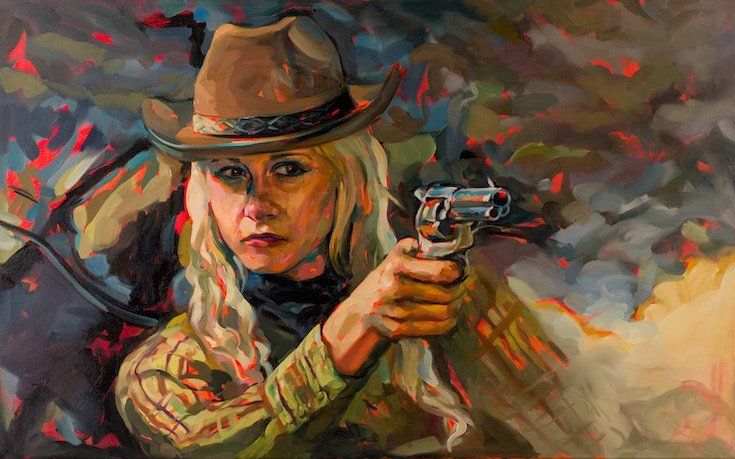
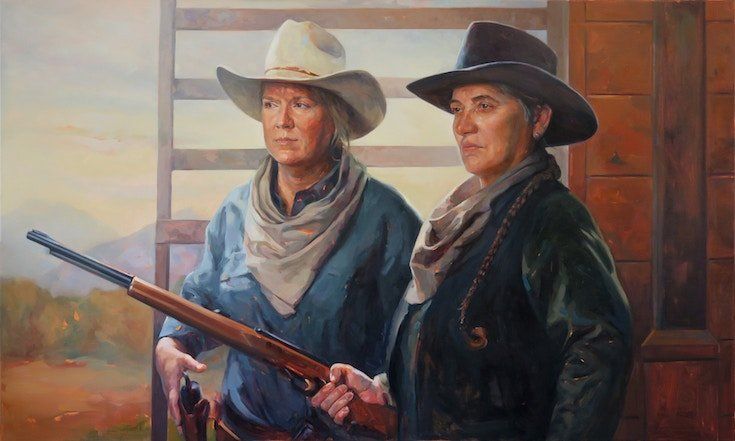
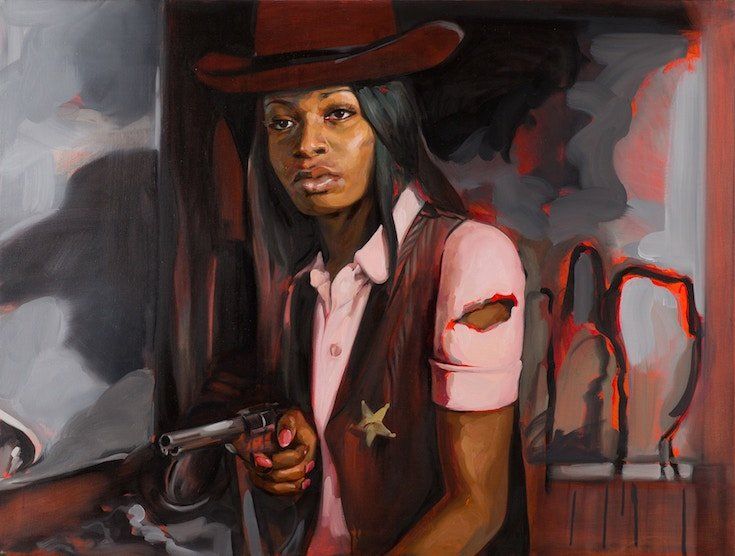
House had spent much of her career painting women in ways that clashed with media representations, so she decided to tackle the male-dominated Western genre.
She put out a call for models and was quickly overwhelmed with women who wanted to participate.
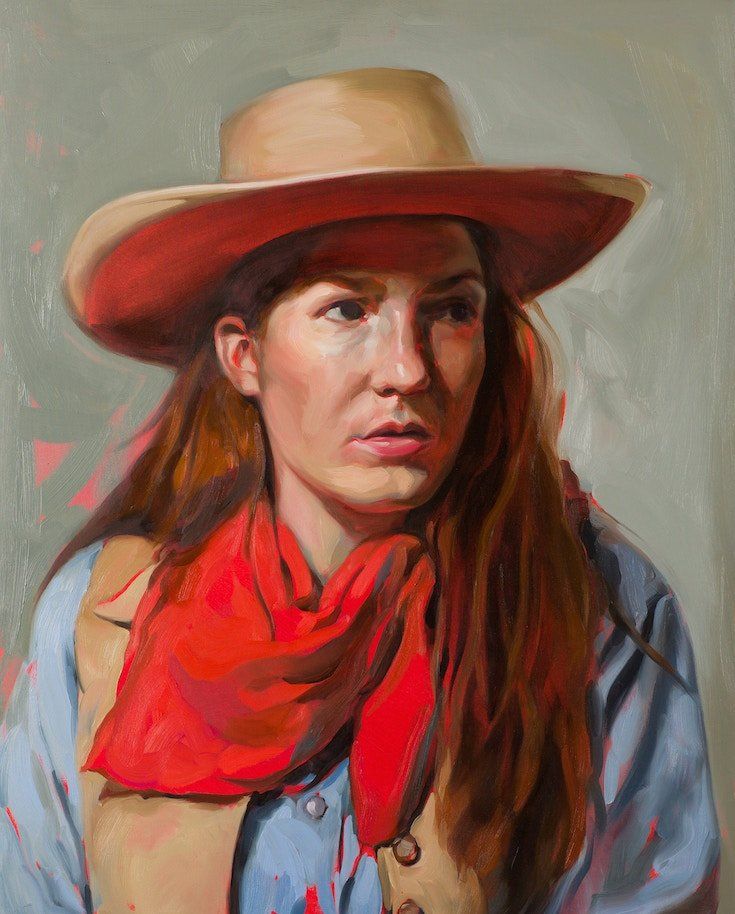
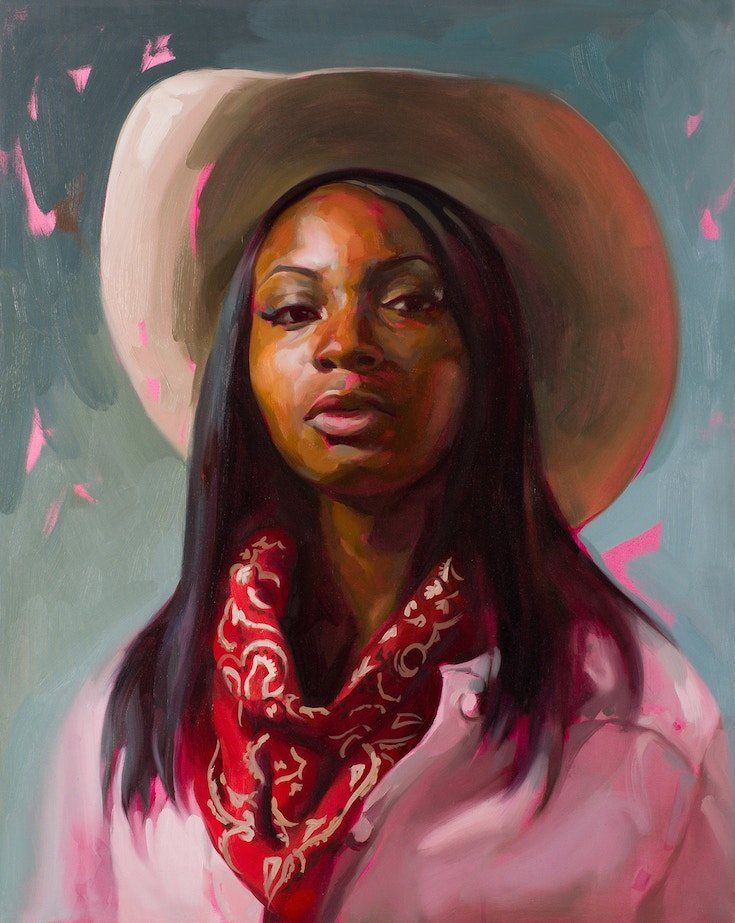
All images by Felice House, used with permission.
House says many of the models already knew which iconic cowboy they wanted to portray.
Virginia Schmidt became “Virginia Eastwood.”
Then there was “Liakesha Dean.”
And “Rebekah Wayne.”
House first photographed the models in Western getups, then painted from the images she captured.
She also says practicing the facial expressions and body language was the hardest part for the models.
“Women are kind of trained to make coy, approachable facial expressions,” she says.
Turning these women into iconic and powerful heroes meant stripping away any remnants of the “sexy cowgirl” trope.
The paintings themselves are larger than life. Roughly 1.25 times larger, to be specific.
“When you see them in person, people are surprised by the scale.” People aren’t used to women towering over them, House says.
And that’s exactly the point. House wanted to start a conversation about who is assigned power and how we view it.
In that sense, the timing couldn’t have been better. “Issues with gender and power in the U.S. are kind of in the forefront of people’s minds, ” she says.
In the very beginning of the project, House says she simply digitally clipped one of the models heads and put it on John Wayne’s body.
“It looked ridiculous,” she says with a laugh. “But then I thought, what if I could find a way to give this same sense of power [that iconic male heroes have] to women?”
With a brush and a few massive canvases, she managed to do just that, and she hopes it’ll make a few people think differently about how we define who can be a hero.
In the meantime, and despite her criticisms of the films of yesteryear, House says pop culture is getting better at representing women. Projects like this one definitely help.
After all, it was John Wayne himself who once said, “Tomorrow hopes we have learned something from yesterday.”